GICD ETF: the Guardian i3 Canadian Dividend Growth Fund, explained


Short answer: GICD is the ETF series of the Guardian i3 Canadian Dividend Growth Fund, an actively managed Canadian dividend ETF that began trading on the TSX on June 16, 2026. Guardian’s i3 models screen for sustainable, growing dividends, and human managers build the portfolio. The management fee is 0.50%, plus a 0.18% administration fee.
GICD is the Canadian sibling of GIGD, launched the same day. Guardian says the underlying Canadian dividend strategy has run for more than a decade, but the mutual fund version of this specific fund only launched in May 2026, and the ETF series in June. So the track record you can actually inspect is short. This page covers what is disclosed and what is not. It is not financial advice.
What GICD is
| Attribute | Detail |
|---|---|
| Ticker | GICD |
| Issuer | Guardian Capital LP |
| Strategy | Active Canadian dividend growth, AI-assisted screening |
| Management fee | 0.50% (plus 0.18% administration fee) |
| Distributions | Quarterly |
| Risk rating | Medium |
| Status | Trading on the TSX since June 16, 2026 |
The process is the same i3 approach as the global fund: Guardian’s models score companies on cash flow, dividend growth, the odds of a dividend cut, and income sustainability, then portfolio managers make the final selections. Guardian also emphasizes downside protection as part of the mandate.
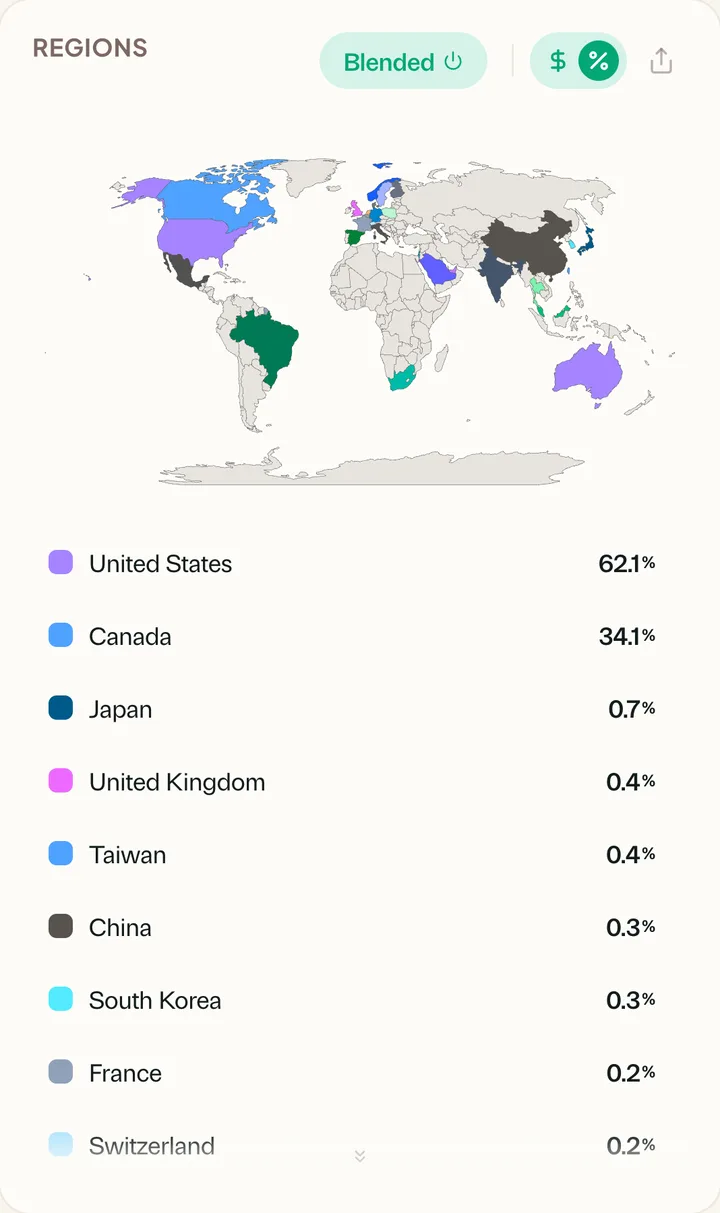
The difference is the universe. Canadian dividend investing means a small pond, and it shows in the portfolio: as of August 31, 2026, Royal Bank of Canada alone was 8.3% of the fund, and the top ten holdings made up about 47% of it. That is normal for a Canadian dividend mandate, but it is worth seeing clearly. Financials (26.3%), energy (25.2%), and materials (16.1%) made up about two-thirds of the fund, with industrials and utilities most of the rest. You are buying a concentrated slice of Canadian banks, insurers, energy, and miners, however the screening is done.
What to weigh
- Concentration comes with the territory. Top-ten holdings near half the fund means single-company news moves it. The Medium risk rating, one notch above its global sibling, reflects that.
- The all-in cost is above 0.68%. A 0.50% management fee plus a 0.18% administration fee, before taxes and before the MER is published. Plain Canadian dividend index ETFs cost a fraction of that, so the active screening has a hurdle to clear.
- If you already own Canadian banks, check the overlap. A lot of Canadian portfolios are already heavy on the same names this fund holds. Adding GICD may double a bet you have already made.
- No yield worth quoting yet. The first distribution covered a stub period only, and September 2026 was the first full quarter. One quarter is not a track record.
GICD versus GIGD
Same process, different pond. GIGD applies the i3 screen globally, which brings in US and European tech, healthcare, and financials that Canada simply does not have. GICD keeps it domestic, which means more concentration and more overlap with what Canadians typically already own. Between the two, the global version adds more diversification per dollar.
Frequently asked questions
When did GICD launch?
The ETF series began trading on the TSX on June 16, 2026. The mutual fund it wraps launched May 14, 2026, so the whole fund is new even though Guardian’s underlying Canadian dividend strategy is older.
How often does GICD pay distributions?
Quarterly. The first payment was $0.01001 per unit for a stub period, with a June 24, 2026 record date. The second, for the first full quarter, was $0.0394 per unit with a September 23, 2026 record date. That is too little history for a meaningful yield figure.
Is GICD just Canadian banks?
Not just, but banks are a big part of it. Royal Bank was the top holding at 8.3% as of August 31, 2026, and the top ten holdings were about 47% of the fund. Financials, energy, and materials together were about two-thirds of it. That mix is what a Canadian dividend mandate looks like.
Bottom line
GICD is a sensible idea, quality Canadian dividend payers screened for sustainability, wrapped in a brand-new ETF series with real concentration and an all-in cost above 0.68%. The honest move is to check how much of it you already own through other funds before adding it. If it does earn a spot, Greenline will show you the overlap with the rest of your portfolio.
See how GICD fits with everything else you own, across every account. Try a sample portfolio


More in DIY Investing

GIGD ETF: the Guardian i3 Global Dividend Growth Fund, explained
New Canadian ETFs, June 2026: all 28 launches and what's worth knowing
How dividends work (and get taxed) in Canada

How to pick ETFs in Canada
GIGD ETF: the Guardian i3 Global Dividend Growth Fund, explained
GIGD is the ETF series of Guardian's AI-assisted global dividend growth strategy, trading on the TSX since June 16, 2026. Here's the strategy, the fees, and what's still unknown.
New Canadian ETFs, June 2026: all 28 launches and what's worth knowing
How dividends work (and get taxed) in Canada
The first time I received a dividend, I didn't know what it was. Here's what dividends are, how Canadian dividend tax works, and what to watch for.