
CADE ETF: what CADE.TO is, what it holds, and how it works


Short answer: CADE.TO is the Avantis CIBC International Equity ETF. It listed on the TSX on March 13, 2026, at a 0.29% management fee. It holds international developed-market companies (outside North America) with tilts toward value, smaller, and profitable companies. It is the Canadian-listed sibling of the U.S.-listed AVDE. CIBC’s first interim report puts the annualized MER at 0.33% (period ended June 30, 2026).
CADE is the international sleeve of the Avantis CIBC lineup. It covers developed markets outside North America, run on the Avantis factor methodology, in one CAD-denominated ticker.
This is not financial advice. I’m sharing what I’ve learned from my own research, and your situation might differ. Fund details change, so always check the latest disclosures before deciding.
What CADE actually is
CADE.TO is an ETF listed on the TSX in Canadian dollars. CIBC handles the wrapper; Avantis runs the strategy. It holds companies across developed international markets (Europe, Japan, Australia, and similar), weighted toward value and profitability rather than pure size. Its closest U.S.-listed cousin is AVDE, the Avantis International Equity ETF.
| Attribute | Value |
|---|---|
| Ticker | CADE (TSX) |
| Full name | Avantis CIBC International Equity ETF |
| Inception | March 13, 2026 |
| Strategy | International developed equity, factor-tilted |
| Management fee | 0.29% |
| MER | 0.33% annualized (first interim report, to June 30, 2026) |
| Net assets | About $190 million (June 30, 2026) |
| Currency | CAD |
| U.S.-listed cousin | AVDE (0.23% expense ratio, as of January 2026) |
| Manager | CIBC, sub-advised by Avantis Investors |
What CADE holds
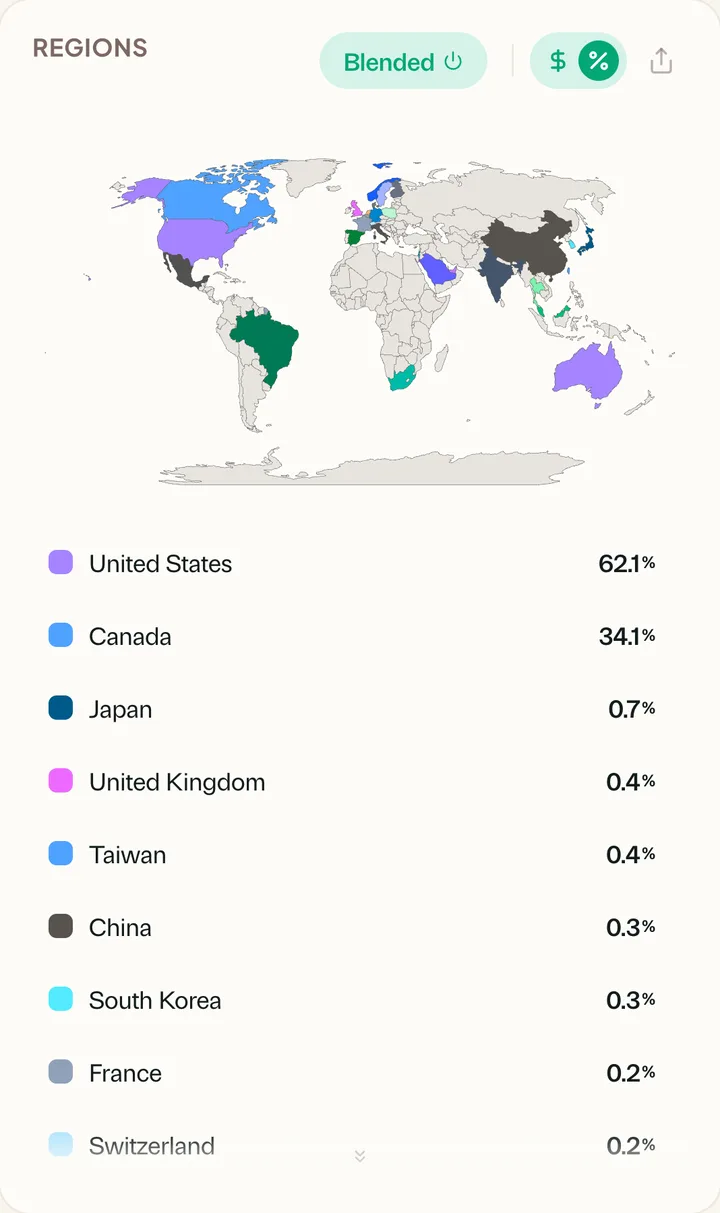
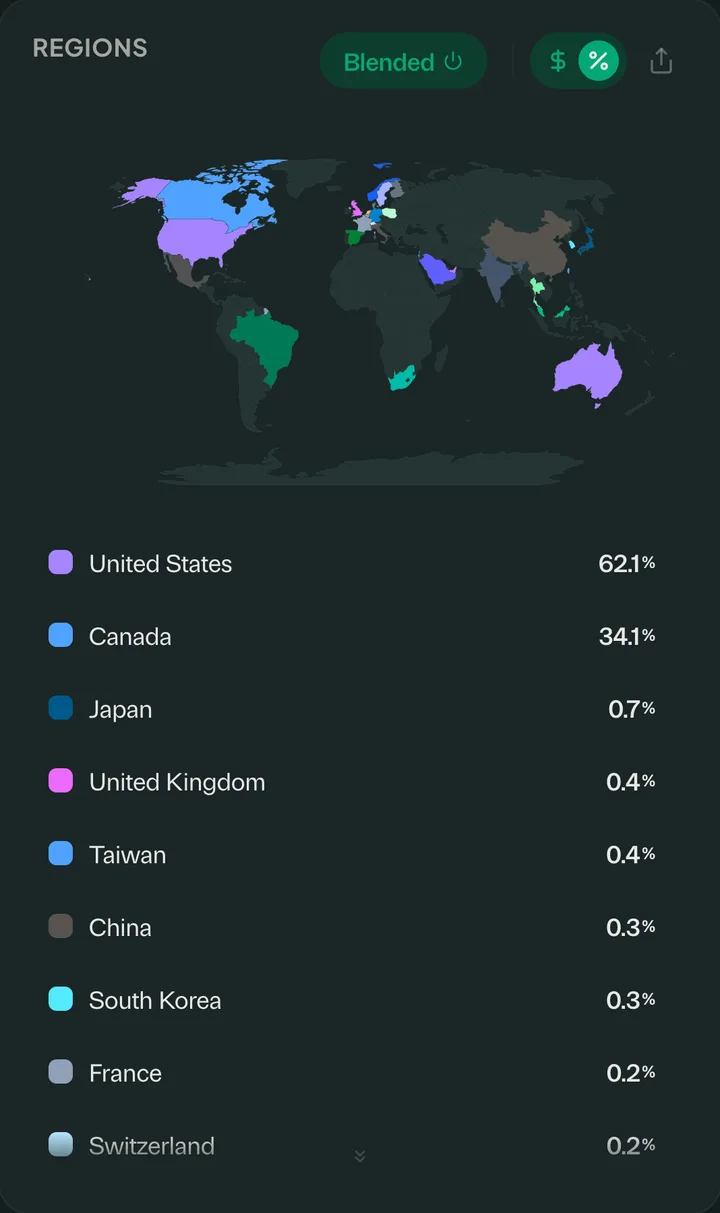
CADE holds a diversified basket of developed-market companies outside North America, screened toward value and profitability. Compared with a cap-weighted international index, it carries less concentration in the largest names and more weight in cheaper, profitable companies across the size range.
CIBC’s first interim report gives a snapshot as at June 30, 2026. The largest holdings were small slices: ASML 2.0%, Roche 1.1%, BHP 0.9%, then HSBC and Shell at 0.8% each. By sector, financials led at 25.8%, followed by industrials at 21.5%, materials at 9.3%, and technology at 9.1%. CIBC hasn’t published a country breakdown in that report.
The fee and the MER
CADE’s management fee is 0.29%. The U.S.-listed AVDE runs at 0.23%, but buying it as a Canadian means USD conversion and a USD account. CADE removes that by being CAD-denominated. The fund page doesn’t show an MER yet, but CIBC’s first interim report (period ended June 30, 2026) puts it at 0.33% annualized, 4 basis points above the fee.
How the factor tilt works
A cap-weighted international fund owns developed markets by company size. CADE tilts toward value (cheaper on fundamentals), size (less megacap concentration), and profitability. The academic basis is Fama-French plus Novy-Marx.
How CADE fits with the rest of the lineup
CADE is the international building block. It pairs with CACE (Canada), CAUS (U.S.), and CAEM (emerging markets) for a self-built Avantis portfolio, or sits as an international tilt on a global core. If you want one fund and no work, CAGE already holds international developed markets internally. Full lineup in the Avantis CIBC ETFs guide.
Frequently asked questions
What is CADE.TO?
The Avantis CIBC International Equity ETF, managed by CIBC with Avantis as sub-advisor. Listed March 13, 2026, CAD-denominated, holding international developed-market companies tilted toward value, smaller size, and profitability.
What is CADE’s MER?
Management fee 0.29%. CIBC’s first interim report puts the annualized MER at 0.33% (to June 30, 2026); the fund page doesn’t show it yet. The U.S.-listed AVDE is 0.23% but carries USD friction for a Canadian.
Does CADE include emerging markets?
No. CADE is developed international only. Emerging markets are covered by the separate CAEM sleeve, or internally by the all-in-one CAGE.
Can I hold CADE in a TFSA or RRSP?
Yes, in any standard Canadian registered or non-registered account. Being Canadian-listed, no currency conversion is needed.
Bottom line
CADE is a clean, CAD-denominated international developed-equity sleeve with a factor tilt. It’s a building block for a self-constructed Avantis portfolio. If you want simplicity, CAGE already covers international without a separate holding.
See how CADE fits with everything else you own, across every account. Try a sample portfolio


More in DIY Investing

Avantis CIBC ETFs: factor investing arrives in Canada
CACE ETF: what CACE.TO is, what it holds, and how it works
CAUS ETF: what CAUS.TO is, what it holds, and how it works
CAEM ETF: what CAEM.TO is, what it holds, and how it works
CAGE ETF: what CAGE.TO is, what it holds, and how it works

Not all ETFs are created equal
Avantis CIBC ETFs: factor investing arrives in Canada
CIBC and Avantis launched a lineup of factor-tilted ETFs in early 2026. Here's what's in it, who Avantis is, and how to think about whether any of them fit.
CACE ETF: what CACE.TO is, what it holds, and how it works
CAUS ETF: what CAUS.TO is, what it holds, and how it works
CAEM ETF: what CAEM.TO is, what it holds, and how it works
CAGE ETF: what CAGE.TO is, what it holds, and how it works