
CAEM ETF: what CAEM.TO is, what it holds, and how it works


Short answer: CAEM.TO is the Avantis CIBC Emerging Markets Equity ETF. It listed on the TSX on March 31, 2026, at a 0.39% management fee, the last of the original eight Avantis CIBC funds to launch. It holds emerging-market companies with tilts toward value, smaller, and profitable companies. It is the Canadian-listed sibling of the U.S.-listed AVEM. CIBC’s first interim report puts the annualized MER at 0.45% (period ended June 30, 2026).
CAEM is the emerging-markets sleeve, and the last of the single-region building blocks in the Avantis CIBC lineup. Until it listed, anyone building a complete Avantis portfolio from the individual sleeves had no emerging-markets piece and had to hold CAGE (which covers EM internally) or a separate fund.
This is not financial advice. I’m sharing what I’ve learned from my own research, and your situation might differ. Fund details change, so always check the latest disclosures before deciding.
What CAEM actually is
CAEM.TO is an ETF listed on the TSX in Canadian dollars. CIBC handles the wrapper; Avantis runs the strategy. It holds companies across emerging markets, screened toward value and profitability rather than pure size. Its closest U.S.-listed cousin is AVEM, the Avantis Emerging Markets Equity ETF.
| Attribute | Value |
|---|---|
| Ticker | CAEM (TSX) |
| Full name | Avantis CIBC Emerging Markets Equity ETF |
| Inception | March 31, 2026 |
| Strategy | Emerging-market equity, factor-tilted |
| Management fee | 0.39% |
| MER | 0.45% annualized (first interim report, to June 30, 2026) |
| Risk rating | Medium to high |
| Net assets | About $66 million (June 30, 2026) |
| Currency | CAD |
| U.S.-listed cousin | AVEM (0.33% expense ratio, as of January 2026) |
| Manager | CIBC, sub-advised by Avantis Investors |
What CAEM holds
CAEM holds a diversified basket of emerging-market companies, screened toward value and profitability. Emerging-market indexes are already volatile and concentrated in a few large countries and names; the Avantis screens spread weight toward cheaper, profitable companies rather than the largest by size.
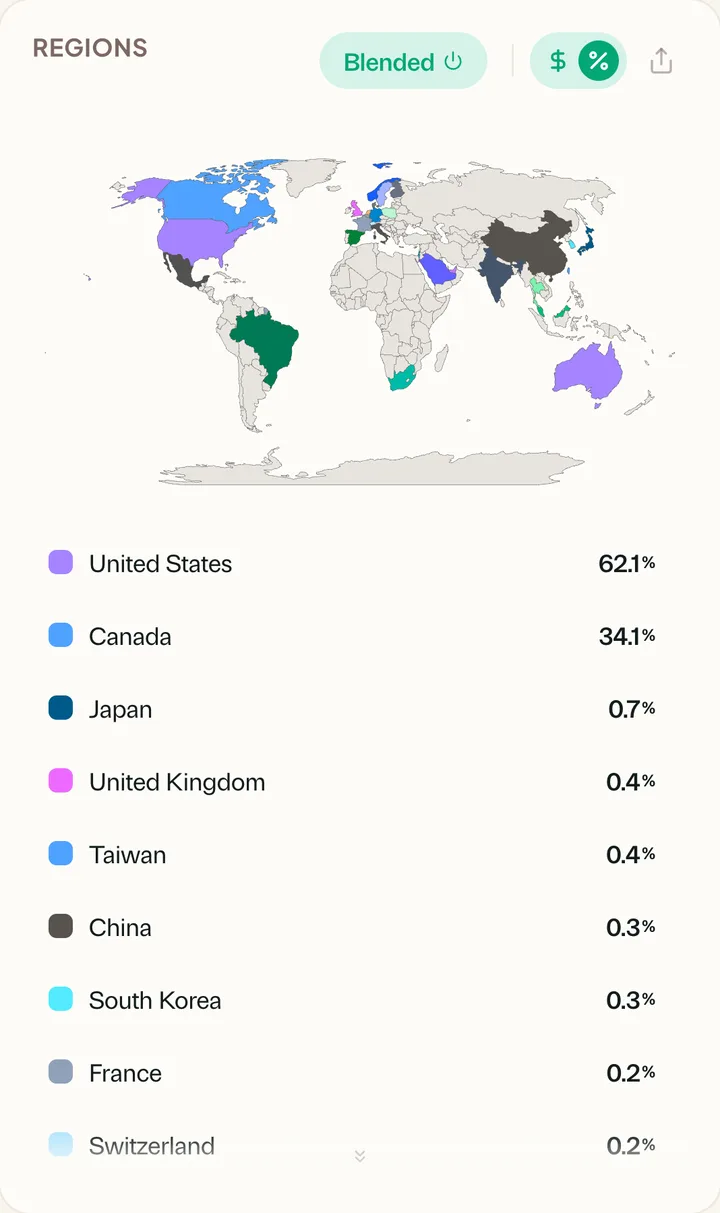
In practice, the tilt doesn’t make CAEM a spread-out fund. CIBC’s first interim report (as at June 30, 2026) shows technology at 42.8% of the fund, with Asian chipmakers on top: Samsung Electronics 7.6%, SK Hynix 6.9%, and TSMC 9.5% across its two share lines. Financials were next at 17.5%. CIBC hasn’t published a country breakdown in that report.
The fee and the MER
CAEM’s management fee is 0.39%, tied with CASV for the top of the Avantis CIBC range, because emerging-markets investing is more expensive to run. The U.S.-listed AVEM is 0.33%, but carries USD conversion and a USD account for a Canadian. CAEM removes that by being CAD-denominated. The fund page doesn’t show an MER yet, but CIBC’s first interim report (period ended June 30, 2026) puts it at 0.45% annualized, 6 basis points above the fee.
How the factor tilt works
A cap-weighted emerging-markets fund owns the market by size, concentrated in a handful of large countries and megacaps. CAEM tilts toward value, smaller size, and profitability. The academic basis is Fama-French plus Novy-Marx.
How CAEM fits with the rest of the lineup
CAEM is the emerging-markets building block, the last piece for a self-built Avantis portfolio (CACE, CAUS, CADE, CAEM). It has the shortest track record of the original eight. If you want one fund and no work, CAGE already holds emerging markets internally and you don’t need CAEM separately. Full lineup in the Avantis CIBC ETFs guide.
Frequently asked questions
What is CAEM.TO?
The Avantis CIBC Emerging Markets Equity ETF, managed by CIBC with Avantis as sub-advisor. Listed March 31, 2026, CAD-denominated, holding emerging-market companies tilted toward value, smaller size, and profitability. It was the last of the original eight funds to list.
What is CAEM’s MER?
Management fee 0.39%, tied for the top of the Avantis CIBC range. CIBC’s first interim report puts the annualized MER at 0.45% (to June 30, 2026); the fund page doesn’t show it yet. The U.S.-listed AVEM is 0.33% but carries USD friction for a Canadian.
Why is CAEM more expensive than the other sleeves?
Emerging-markets investing has higher trading and operational costs than developed markets. The 0.39% fee reflects that, the same reason a cap-weighted EM index fund costs more than a U.S. one.
Can I hold CAEM in a TFSA or RRSP?
Yes, in any standard Canadian registered or non-registered account. Being Canadian-listed, no currency conversion is needed.
Bottom line
CAEM completes the Avantis CIBC lineup with the emerging-markets sleeve. It’s the most demanding of the lineup to hold, because it stacks factor patience on top of emerging-markets volatility. For a self-built Avantis portfolio it’s the missing piece; for everyone else, CAGE already covers emerging markets.
See how CAEM fits with everything else you own, across every account. Try a sample portfolio


More in DIY Investing

Avantis CIBC ETFs: factor investing arrives in Canada
CACE ETF: what CACE.TO is, what it holds, and how it works
CADE ETF: what CADE.TO is, what it holds, and how it works
CAUS ETF: what CAUS.TO is, what it holds, and how it works
CAGE ETF: what CAGE.TO is, what it holds, and how it works

Not all ETFs are created equal
Avantis CIBC ETFs: factor investing arrives in Canada
CIBC and Avantis launched a lineup of factor-tilted ETFs in early 2026. Here's what's in it, who Avantis is, and how to think about whether any of them fit.
CACE ETF: what CACE.TO is, what it holds, and how it works
CADE ETF: what CADE.TO is, what it holds, and how it works
CAUS ETF: what CAUS.TO is, what it holds, and how it works
CAGE ETF: what CAGE.TO is, what it holds, and how it works