Bonds explained: do you need them in your portfolio?


Part 2 of 5
This article is part of our Beyond the basics series.
Short answer: A bond is a loan you make to a government or company in exchange for regular interest payments. Bonds usually drop less than stocks during downturns, which makes them a stabilizer in a portfolio. Younger investors often skip them; that’s a defensible choice if you don’t panic-sell when stocks fall.
In early 2022, a lot of people on Reddit were saying the same thing: “I’m in my 20s, why would I hold bonds? Bonds are for boomers.” It was almost a badge of honour. 100% equities. Maximum growth. No dead weight dragging down your returns.
Then the market dropped. The S&P 500 fell over 18% that year. The TSX fell too, though less steeply. And the people who held a 20% bond allocation? They still had a rough year, but they slept fine. Their portfolios dropped less, recovered faster, and most importantly, they didn’t panic-sell at the bottom. Some of the 100% equity crowd did. I watched friends pull their investments at the worst possible time because they couldn’t stomach watching 25% of their portfolio disappear. That “dead weight” turned out to be the thing that kept other investors in the game.
None of this is financial advice. I’m just sharing what I’ve learned from watching this play out, both in my own portfolio and in the conversations I have with people who are trying to figure this stuff out.
What a bond actually is
A bond is a loan. That’s it. When you buy a government bond, you’re lending money to the government. When you buy a corporate bond, you’re lending money to a company. In return, they pay you interest at regular intervals, and at the end of the term, they give your money back.
It’s the opposite of buying a stock. When you buy a stock, you own a piece of the company. When you buy a bond, you’re the lender. You don’t own anything. You just collect interest.
The interest rate on a bond is called the coupon. A bond with a 4% coupon pays you 4% per year on the face value of the bond. When the bond matures (reaches its end date), you get your original investment back.
Why bond prices move the way they do
This is the part that trips people up, and it confused me for a long time too.
When interest rates go up, bond prices go down. When interest rates go down, bond prices go up. It seems backwards, but here’s the logic: if you hold a bond paying 3%, and new bonds start paying 5%, nobody wants your 3% bond anymore. So its price drops. The reverse works too. If rates fall to 2%, your 3% bond suddenly looks attractive, and its price rises.
If you hold a bond to maturity, none of this matters. You still get your coupon payments and your principal back. The price swings only matter if you sell before the bond matures, or if you’re holding a bond ETF (more on that below).
Government bonds vs. corporate bonds
Government bonds are considered safer because the government is less likely to default on its debt. The Government of Canada has never defaulted on a bond. The trade-off is that government bonds pay lower interest rates.
Corporate bonds pay more because there’s more risk. A company can go bankrupt. A government (at least, a developed one) almost certainly won’t. The riskier the company, the higher the interest rate they need to offer to convince you to lend them money.
For most people building a portfolio, government bond ETFs or broad market bond ETFs are the right choice. You don’t need to get fancy here.
Individual bonds vs. bond ETFs
You can buy individual bonds, but most people don’t. It’s simpler to buy a bond ETF, which holds hundreds or thousands of bonds in a single fund.
The key difference: an individual bond has a maturity date. You know exactly when you’re getting your money back and exactly how much interest you’ll earn. A bond ETF has no maturity date. It continuously buys and sells bonds as old ones mature and new ones are issued. That means the price of a bond ETF fluctuates in a way that a single held-to-maturity bond does not.
This is why 2022 was a shock for some bond ETF holders. Interest rates rose sharply, and bond ETF prices dropped. People who thought bonds were “safe” watched their bond holdings lose 10% or more. The bonds themselves weren’t defaulting. The ETF prices were just reflecting the new, higher rate environment.
Over time, those bond ETFs adjust. They start buying newer bonds with higher coupons. But in the short term, the price drop was real.
The case for holding bonds
Stability. Bonds don’t go up as much as stocks, but they don’t go down as much either. In a market crash, bonds (especially government bonds) tend to hold their value or even go up, because investors flee to safety. This cushion can be the difference between staying invested and selling everything in a panic.
Rebalancing fuel. If your portfolio is 80% stocks and 20% bonds, and stocks crash, your portfolio shifts to maybe 70% stocks and 30% bonds. You can sell some bonds and buy more stocks while stocks are cheap. You’re effectively buying low, funded by the part of your portfolio that didn’t drop. Without bonds, you’d have to add fresh cash to rebalance, which most people don’t have lying around during a recession.
Sleeping at night. This one gets overlooked. The “best” portfolio is the one you can actually hold through a downturn. If 100% equities makes you check your account every day and consider selling when things look bad, it’s not actually the best portfolio for you. A slightly lower expected return that you stick with for 30 years beats a higher expected return that you abandon after 18 months.
The case against holding bonds
Lower long-term returns. Over the last century, stocks have significantly outperformed bonds. If you have a 30-year time horizon and a strong stomach, holding 100% equities will very likely give you a larger portfolio at the end. That’s not guaranteed, but the historical evidence is strong.
Young investors have time. If you’re 25 and investing for retirement at 65, you have 40 years to ride out downturns. Every dollar in bonds is a dollar that’s not compounding at the higher expected return of stocks. The longer your time horizon, the less you need the cushion.
This is why all-in-one equity ETFs like XEQT exist. They’re designed for investors who want maximum growth and can handle the volatility.
Bonds vs. GICs
GICs (Guaranteed Investment Certificates) are similar to bonds in that you’re lending money and earning interest. But there are differences.
A GIC locks your money for a fixed term. You can’t sell it early (or if you can, there’s a penalty). The rate is guaranteed. You know exactly what you’ll earn. GICs are covered by CDIC insurance up to $100,000 per institution. They’re about as safe as it gets in Canada.
Bond ETFs give you more flexibility. You can sell any time. But the price fluctuates, so you might get back more or less than you put in. The rates aren’t guaranteed.
For money you absolutely cannot lose and don’t need to access, GICs are hard to beat. For a long-term portfolio allocation designed to reduce volatility, bond ETFs make more sense because they’re liquid and easy to rebalance.
So, do you need bonds?
The honest answer is: it depends on whether you can stay invested when things drop.
If you can genuinely watch your portfolio fall 30% and not sell, 100% equities might be right for you. If you’ve never been through a real downturn, you might not actually know the answer to that question yet. I’ve watched friends who were absolutely certain they could handle volatility turn around and sell everything the moment it got real.
A common starting point: subtract your age from 100, and that’s your stock percentage. So at 30, you’d hold 70% stocks and 30% bonds. It’s a rough rule of thumb, not a law. Some people adjust it. Some ignore it entirely. The point is to think about what allocation will keep you in the game for the full ride.
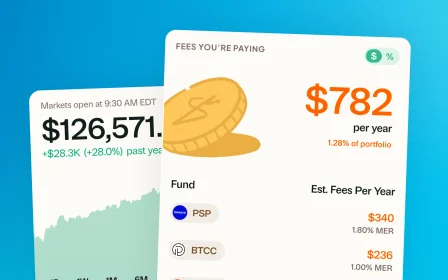
The fees you pay on your bond holdings matter too. A bond ETF with a high MER can eat into the already-modest returns that bonds provide. Keep costs low.
One wrinkle worth knowing if you have money with a deadline. An ordinary bond fund never matures, so there is no date on which you are guaranteed your money back at a known value. Target maturity funds like TBCK hold bonds that all come due in the same year and then wind up, which makes them behave much more like owning a bond than owning a bond fund.
Whatever you decide, the goal is the same: build a portfolio you’ll actually hold for decades. If bonds help you do that, they’ve earned their spot.
Knowing what a fund holds is the easy part. The harder question is what you actually own across every account, and how it's really doing. Seeing it all in one place is what we built Greenline to do, if you ever want a hand.
More in DIY Investing

Just buy XEQT? The one-ETF strategy explained

Rebalancing: what it means and when to do it

TBCK ETF: the TD Target 2031 Investment Grade Bond Fund, explained
JPIE ETF: what JPIE.TO is, what it holds, and how it works

What you're actually paying in investment fees
Just buy XEQT? The one-ETF strategy explained
'Just buy XEQT' has become the go-to answer in Canadian investing. Here's what XEQT actually holds, why it works for most people, and when you want more.
Rebalancing: what it means and when to do it
TBCK ETF: the TD Target 2031 Investment Grade Bond Fund, explained
JPIE ETF: what JPIE.TO is, what it holds, and how it works