


The trades that got you here

The quick take: Most investors remember their losses better than their wins because of negativity bias. Going back through the trades that actually worked (the boring ones you stopped thinking about) is what shows you why your portfolio looks the way it does today.
A few years ago, a friend asked me how my portfolio was doing. I started listing the things that hadn’t gone well. A stock I’d held too long. A position I should’ve added to. An ETF I’d switched out of right before it had a great quarter. He stopped me and said, “OK, but what about the stuff that worked?”
I didn’t have a good answer. Not because nothing had worked. Plenty had. I just hadn’t been keeping score on the wins the same way I’d been keeping score on the losses.
We’re wired to remember the bad stuff
This isn’t unique to investing. It’s how people work. Psychologists call it negativity bias. A loss stings roughly twice as much as an equivalent gain feels good. So when you think about your investment history, you naturally drift toward the mistakes. The stock you sold the day before it jumped 20%. The position that went to zero. The time you panicked and went to cash.
Those memories are loud. They stick around. They shape how you see yourself as an investor.
But somewhere in your history, there are quieter stories. A stock you bought because you believed in the company, and it doubled over three years. A position you built gradually, adding a little every month, until it became one of your best holdings. An ETF you bought during a dip and never sold.
Those trades got you here. They’re the reason your portfolio looks the way it does today. And most people never go back and look at them.
The positions you forget about
I bought Canadian bank stocks in 2016. Not because I had some brilliant thesis. I just thought, “Banks make money, they’ve been around forever, and they pay dividends.” That was the whole analysis. Over the next several years, those positions grew steadily. Dividends got reinvested. The value compounded.
I almost never thought about them. They weren’t exciting. They didn’t make headlines. Nobody texted me about them. But when I finally sat down years later and looked at what those positions had actually returned, the numbers were genuinely surprising. Not because the returns were spectacular, but because the slow, boring accumulation had added up to something real.
That’s the thing about your best trades. They’re usually not dramatic. They don’t feel like wins in the moment. They feel like nothing. You just buy something, hold it, and years later realize it quietly did exactly what it was supposed to do.
Why looking back matters
There’s a practical reason to review your wins, not just your losses. It tells you something about your own instincts.
If you look back and realize that your best returns came from broad ETFs you held for years, that’s useful information. It means your edge isn’t in picking individual stocks. It’s in patience. If your best returns came from individual companies you knew well and believed in, that tells you something different.
Most people invest for years without ever doing this kind of review. They have a vague sense of how things have gone, but they’ve never actually lined up the trades that worked and asked why. What did those winning positions have in common? How long did you hold them? Did you add to them over time or buy all at once? Did you have conviction, or did you just get lucky?
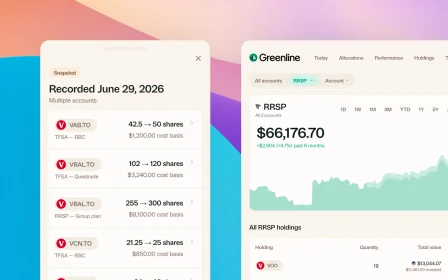
Not being able to do this easily is exactly why I built Greenline. I wanted to pull up every position I’d ever held, see the actual return on each one, and understand which trades carried the portfolio. No brokerage I used made that simple.
Without a record you can look back on, these questions are almost impossible to answer. You’re relying on memory, and memory is biased toward the painful stuff.
The cost of only studying your losses
If you only review what went wrong, you’ll develop an overly cautious view of yourself. You’ll think you’re worse at this than you actually are. You’ll hesitate on good opportunities because all you remember is the time something similar didn’t work out.
I’ve seen this happen with friends. They’ll say, “I’m terrible at picking stocks,” but when I ask them to actually list their picks over the past five years, the record is mixed. Some winners, some losers, and a lot of positions that did fine. The overall track record is reasonable. But they only remember the losers, so they feel like they can’t do anything right.
This is especially common with stocks you sold too early. You bought something at $40, it went to $60, and you sold. Then it went to $100. That feels like a loss, even though you made 50%. The gain is invisible because you’re too busy thinking about the gain you missed.
A 50% return is a 50% return. You don’t need to catch the entire move for a trade to count as a win.
A 50% return is a 50% return. You don’t need to catch the entire move for a trade to count as a win.
What this looks like in practice
Sit down and look at every position you’ve held over the past few years. Not just the current ones. The ones you sold, too. Calculate the actual return on each one. You might need your brokerage statements or your own records to do this.
Then separate them into three buckets: things that went well, things that didn’t, and things that were roughly flat. Most people are surprised by how many positions end up in the first bucket.
The wins don’t need to be home runs. A stock that returned 8% a year for five years is a win. An ETF that tracked the market and did exactly what you expected is a win. A dividend stock that paid you consistently for years, even if the price didn’t move much, is a win.
You don’t need to celebrate them. You just need to see them. Because the trades that got you here deserve the same attention as the ones that didn’t work out. They’re the foundation your portfolio is built on. And understanding why they worked is just as valuable as understanding why other things failed.
The next time you catch yourself replaying a bad trade in your head, try replaying a good one instead. You might find you have more of them than you thought.
More in The Long Game
Time in the market beats timing the market

Why your investment returns are so confusing

What a market crash looks like from the inside

The multi-account problem
Time in the market beats timing the market
Staying invested through downturns almost always beats trying to buy low and sell high. Here's why the boring strategy wins.
Why your investment returns are so confusing
What a market crash looks like from the inside
What do market crashes actually look like in the numbers? How bad do they get, how long do they last, and what does the historical record say about recovery?