
How to transfer investments between brokerages


Part 4 of 5
This article is part of our Beyond the basics series.
Short answer: Transfer investments between Canadian brokerages “in-kind” (shares move as-is, no selling) by submitting a transfer form at your new brokerage. Most receiving brokerages reimburse the $100 to $150 transfer-out fee. Use account-to-account transfers, not withdraw-and-redeposit, to avoid losing TFSA or RRSP contribution room.
When I opened my first self-directed account at TD, I had to book an appointment at a branch. In person. The advisor gave me the expected pitch, offered products, asked why I was moving money from where it was. I politely declined everything. At the end he softened a bit and said, “You know your stuff,” and recommended I watch Billions. I made a mental note. That was over ten years ago. Still haven’t watched it.
That branch doesn’t exist anymore, torn down for new transit construction. But the experience stuck with me, partly because the hardest part of the whole thing wasn’t the transfer itself. It was convincing myself to walk through the door. I’d been sitting on the decision for months because I was afraid of messing something up.
Transferring investments between brokerages is one of the most straightforward things in investing. It just looks intimidating because nobody explains how it works.
None of this is financial advice. I’m walking through how brokerage transfers work in Canada based on what I’ve seen and learned. Rules and fees can change, so verify the details with your brokerages before you start.
Two types of transfers
When you move investments from one brokerage to another, there are two ways to do it: in-kind or in cash.
| Transfer type | What happens | Tax in a non-registered account | Best for |
|---|---|---|---|
| In-kind | Your existing positions move directly to the new brokerage. Nothing is sold. Cost basis transfers with the shares. | None. No taxable event triggered. | Almost everyone. Keeps you invested through the transfer window and avoids any forced selling. |
| Cash | Old brokerage sells everything, sends cash to the new brokerage. You repurchase from scratch. | Capital gains or losses are triggered on every sold position. | Only when the new brokerage doesn’t support the same products, or you were going to restructure the portfolio anyway. |
In-kind is the default for most people. You avoid selling at a bad time, you don’t trigger any taxable events, and you stay invested the entire time the transfer is processing.
How the ATON system works
Behind the scenes, Canadian brokerage transfers run through a system called ATON (Automated Transfer of Non-certificated Assets). You don’t need to know the technical details, but it helps to know it exists, because it means your old brokerage and new brokerage communicate directly. You don’t need to act as a middleman.
The process is simple. You open an account at your new brokerage (if you haven’t already), then initiate the transfer from the new brokerage’s side. They’ll ask for your old account number and the details of what you want to transfer. The new brokerage sends the request through ATON, and your old brokerage processes it.
You don’t need to call your old brokerage or give them a heads up. In fact, they might try to convince you to stay if you do. The transfer request comes from the receiving side. Your old brokerage is required to process it.
What it costs
Most big banks charge a transfer-out fee, typically between $50 and $150 per account. That means if you’re moving a TFSA, an RRSP, and a non-registered account, you could be looking at $150 to $450 in fees.
Here’s the good news: many receiving brokerages will reimburse those fees. Wealthsimple, Questrade, and others have offered transfer fee reimbursement, though the minimum balance required and the reimbursement process vary. Some do it automatically. Others require you to submit a copy of the fee on your old brokerage’s statement.
It’s worth asking about reimbursement before you transfer. A quick message to customer support at the new brokerage usually gets you a clear answer. If your portfolio is large enough, some brokerages will cover the fees without you even asking.
If you’re comparing brokerages and trying to decide where to land, we have a detailed comparison of Canadian brokerages that covers fees, features, and the tradeoffs between them.
How long it takes
This is the part that tests your patience. A typical transfer takes one to four weeks. Sometimes it’s faster. Sometimes it drags.
During the transfer window, your investments are in limbo. You can’t trade them. You can’t sell them if the market drops. You can’t buy more if an opportunity comes up. They’re just sitting in transit, being processed.
For most people with a long-term portfolio, a few weeks of being locked out doesn’t matter. But if you’re the type to check your account daily, it can feel uncomfortable. If you’re moving to self-directed investing for the first time, know that this waiting period is normal and temporary.
One tip: avoid transferring during RRSP season (January to March). Brokerages are swamped with contribution-related activity, and transfers tend to take longer.
The TFSA mistake that costs people contribution room
This is the single most important thing in this entire guide. If you remember nothing else, remember this.
Never withdraw from your TFSA and re-contribute at another brokerage as a way to “transfer” it.
Here’s why. When you withdraw from a TFSA, the contribution room doesn’t come back until January 1 of the following year. If you withdraw $40,000 from your TFSA in June, then deposit $40,000 into a new TFSA at a different brokerage in July, the CRA sees that as a $40,000 over-contribution. You’ll owe a penalty of 1% per month on the excess amount until it’s resolved.
The correct way to move a TFSA is through an official transfer (in-kind or in cash, through the ATON system). When you do it this way, it’s treated as a transfer, not a withdrawal and re-contribution. Your contribution room stays intact.
This mistake is more common than you’d think. People assume that since TFSA withdrawals are tax-free, there’s no harm in pulling the money out and moving it manually. The tax part is true. The contribution room part is where it goes wrong.
RRSPs and other registered accounts
The same principle applies to RRSPs. If you withdraw from your RRSP to “move” it, the withdrawal is taxed as income, and you permanently lose that contribution room. There’s no getting it back. Always use the official transfer process for registered accounts.
For non-registered (taxable) accounts, the stakes are a bit different. You could technically sell everything, withdraw the cash, and re-invest at a new brokerage. But selling triggers capital gains tax on any profits. An in-kind transfer avoids that entirely.
The bottom line: for any account type, the official transfer is almost always the better path.
Partial transfers
You don’t have to move everything at once. Most brokerages allow partial transfers, where you move some holdings but leave others behind. This can be useful if your old brokerage holds a GIC that hasn’t matured yet, or if you want to keep one account at the old brokerage while moving the rest.
Just be aware that partial transfers can sometimes take longer to process, and your old brokerage might still charge the full transfer-out fee even for a partial move.
What to check after the transfer
Once your investments arrive at the new brokerage, take a few minutes to verify everything.
Check that all your holdings made it across. Confirm that the number of shares matches what you had before. Look at your cost basis (also called “book value” or “adjusted cost base”) and make sure it transferred correctly. Some brokerages don’t pass cost basis data perfectly, and if it’s wrong, it could cause headaches at tax time, especially in non-registered accounts.
If anything looks off, contact your new brokerage. They can usually pull the correct data from your old brokerage’s records.
The bottom line
Switching brokerages is one of those things that feels like a big deal until you actually do it. The process is mostly automated. The fees are usually reimbursed. And the benefits, like lower trading costs, a better app, or access to different investment products, tend to be worth the short wait.
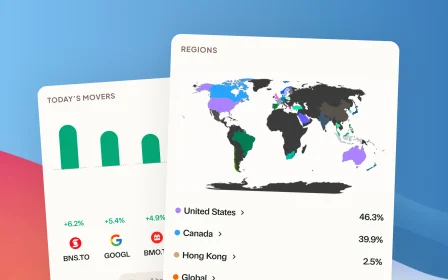
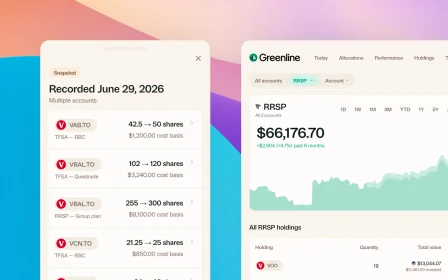
If you’re juggling accounts across multiple brokerages during or after a transfer, Greenline lets you upload statements from all the major Canadian brokerages so you can see everything in one place while the dust settles. No bank logins, no aggregator, just file uploads.
Researching a fund is one thing. Seeing how it fits with everything else you own is another. It's the sort of thing we built Greenline for, if that'd ever be useful to you.
More in DIY Investing

Brokerage comparison: what to look for in Canada

How to start self-directed investing in Canada

TFSA contribution room: how it works
Brokerage comparison: what to look for in Canada
Big-bank brokerages vs independents like Wealthsimple and Questrade, compared on what actually costs you: trading fees, FX markups, and inactivity charges.
How to start self-directed investing in Canada