How to start self-directed investing in Canada


Part 2 of 7
This article is part of our New to investing series.
Short answer: To start self-directed investing in Canada: open an account at a brokerage like Wealthsimple or Questrade, fund it from your bank, choose an account type (TFSA, RRSP, FHSA, non-registered), and buy a low-fee diversified ETF like XEQT. Set up automatic contributions and resist the urge to tinker.
According to the 2024 CSA Investor Index, 45% of Canadian investors now have a self-directed account, and 30% of those accounts were opened in just the last two years. The shift is real. But most of those people started exactly where I did.
I grew up thinking investing was something you did once you were already rich. My parents were immigrants. Nobody in our house talked about stocks or portfolios. I didn’t learn about it in school either. For years, every dollar I earned went straight into a chequing account, and I thought that was the responsible thing to do.
One day a bank teller, someone I’d never met before, stopped and asked me why I left everything in chequing. I said, “Where else do I put it?” He told me: anywhere else. High interest savings, GICs, mutual funds, anything. That conversation sent me down a rabbit hole. I moved $5,000 into Tangerine’s low-cost mutual funds. A few months later I logged in and saw $5,520. I had to double-check whether I’d put in $5,000 or $5,500. It was $5,000. That $520 was just growth. I had never made “free money” before. That changed everything.
This isn’t financial advice. I’m sharing what worked for me, and your situation will be different. Platforms change their fees, account types evolve, and the landscape shifts fast. What’s true today might look different in a year. But if you’ve been meaning to start investing and keep putting it off because it feels complicated, here’s the walkthrough I wish I’d had.
Step 1: Choose a brokerage
A brokerage is where your investment account lives. Think of it like a bank, but for buying stocks and ETFs instead of just holding cash.
Most of the big Canadian banks have their own brokerage arms (TD Direct Investing, RBC Direct Investing, BMO InvestorLine, etc.). There are also independent online brokerages like Questrade and Wealthsimple that tend to have lower fees and more modern apps. I compared the main platforms here, and if you’re deciding between the two most popular online options, here’s a closer look at Wealthsimple vs Questrade.
Key things to look for:
- Commission-free ETF purchases. Many brokerages now let you buy ETFs without paying a trading fee. This matters if you’re investing small amounts regularly.
- Account types. Make sure they offer TFSA, RRSP, and non-registered accounts.
- No annual fees (or low minimums to waive them).
- An app you’ll actually use. If the interface feels clunky, you’re less likely to stay engaged.
Step 2: Open your first account
For most beginners, a TFSA is the best place to start. Everything your investments earn grows tax-free, and you can withdraw anytime without penalty.
Opening an account usually takes 10 to 15 minutes online. You’ll need your SIN, a piece of government ID, and your bank details for funding transfers. Most brokerages will verify your identity digitally, so you won’t need to visit a branch.
Step 3: Fund the account
Link your bank account and transfer in whatever amount feels comfortable. There’s no minimum to start investing at most online brokerages. Even $100 is enough.
Many people set up automatic transfers, say $200 on every payday, so the money moves before they can think about spending it. This is sometimes called “paying yourself first,” and it’s one of the most effective habits in personal finance.
Step 4: Pick your investments
This is where people get stuck. There are thousands of stocks and ETFs. How do you choose?
The simplest, most proven approach for beginners: buy a single all-in-one ETF. These are funds that hold a diversified mix of Canadian, U.S., and international stocks (and sometimes bonds), all in one package. You buy one thing, and you’re invested across thousands of companies worldwide.
Some of the more commonly mentioned options in Canada (these aren’t recommendations, just names you’ll see come up a lot if you start researching):
| Ticker | Provider | Mix |
|---|---|---|
| XEQT | iShares | 100% stocks, globally diversified |
| VEQT | Vanguard | 100% stocks, globally diversified |
| XGRO | iShares | 80% stocks, 20% bonds |
| VGRO | Vanguard | 80% stocks, 20% bonds |
The fees on these tend to be tiny (around 0.20% per year), and they rebalance automatically. You don’t have to pick sectors or time the market. Some people eventually add individual stocks alongside their core ETF, and that’s a fine approach too. But when you’re starting out, the point is: you don’t need to overthink this step.
Step 5: Buy and hold
Once you’ve picked your ETF, place a buy order through your brokerage. It’s usually as simple as typing in the ticker symbol, entering the number of shares, and clicking confirm.
Then the hardest part: do nothing. Don’t check the price every hour. Don’t panic when the market drops 5% on a random Tuesday. The entire point of a diversified all-in-one ETF is that you can invest consistently and let time do the heavy lifting.
This approach isn’t for everyone, and there are plenty of other valid strategies. But the data on buy-and-hold is overwhelming. Investors who stay the course over long periods almost always outperform those who try to time the market. It’s not exciting, but it works. If you want to understand why time in the market matters so much, that’s worth reading too.
Step 6: Keep contributing
The real magic isn’t in picking the “right” investment. It’s in contributing regularly. Even modest amounts compound dramatically over time.
$200 a month invested at a 7% average return turns into about $104,000 after 20 years. You’d have contributed $48,000 of that yourself. The other $56,000 is pure growth, money you earned just by being patient.
The hardest part is starting
For a lot of Canadians, money is genuinely tight, and investing isn’t realistic yet. But there are also a lot of people who could be investing and aren’t, not because of money, but because of uncertainty. They think they need to learn more, read more, wait for the “right time.” I started at 22, earlier than most, and I still catch myself doing the mental math on the few years before that. Not because four years ruined anything, they didn’t, but because every investor eventually does that same calculation and wishes for a bit more runway. You’ll probably never feel fully ready. Start anyway.
And if you’re already past this stage and wondering what comes after you’ve filled your TFSA and RRSP, there’s a next step for that too.
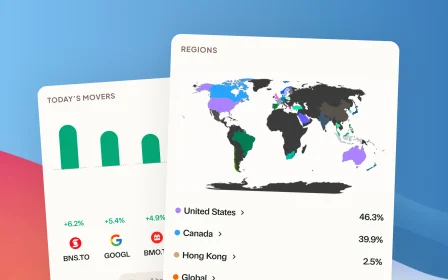
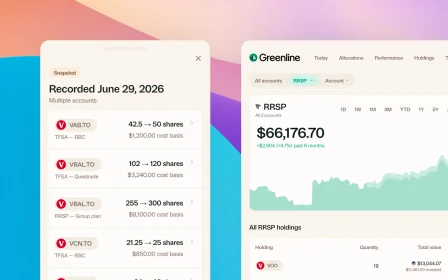
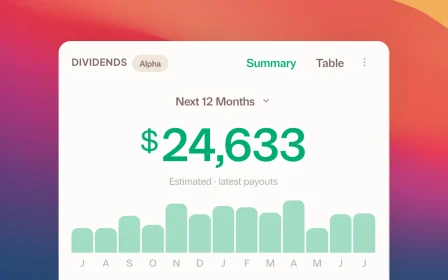
That gap between “I’m investing” and “I actually understand how it’s all going” is part of what pushed me to build Greenline.
Built for Canadians who manage their own investments If you ever want everything you own in one view, that's what Greenline is for.
More in Your First Moves

Brokerage comparison: what to look for in Canada

Just buy XEQT? The one-ETF strategy explained

TFSA vs RRSP: Which should you max out first?
Robo-advisor vs self-directed investing in Canada: which is right for you?

What happens to your money when you hit 'buy'
Brokerage comparison: what to look for in Canada
Big-bank brokerages vs independents like Wealthsimple and Questrade, compared on what actually costs you: trading fees, FX markups, and inactivity charges.
Just buy XEQT? The one-ETF strategy explained
TFSA vs RRSP: Which should you max out first?
Robo-advisor vs self-directed investing in Canada: which is right for you?