


Locked-In Retirement Account (LIRA)
A registered account that holds pension money from a former employer, with restrictions on when and how you can withdraw it.
A LIRA is a registered account that holds money transferred from an employer’s pension plan after you leave that job. It works similarly to an RRSP in that your investments grow tax-deferred, but the key difference is that the money is “locked in.” You can’t simply withdraw it whenever you want.
How money gets into a LIRA
When you leave a job that had a pension plan (either a defined benefit or defined contribution plan), you’re often given the option to transfer the commuted value of your pension into a LIRA. This lets you manage and invest the money yourself, rather than leaving it with your former employer’s pension administrator.
The lock-in restrictions
The “locked-in” part means the money is meant for retirement. You generally can’t withdraw from a LIRA directly. Instead, when you’re ready to start taking income (typically at retirement), you convert the LIRA into a Life Income Fund (LIF) or a similar income vehicle, depending on your province. The LIF has annual minimum and maximum withdrawal limits.
There are limited exceptions that allow early access in some provinces, such as financial hardship, shortened life expectancy, or having a small balance. The rules vary by province and by whether the pension was federally or provincially regulated.
Why it matters
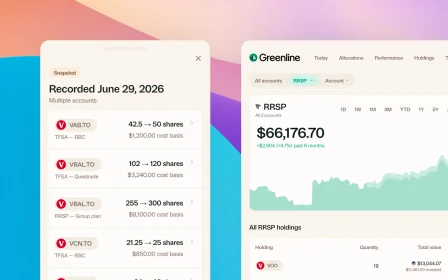
If you’ve changed jobs in Canada and had a pension, there’s a good chance you have (or will have) a LIRA. It’s an important part of your overall portfolio and retirement plan, even though you can’t touch the money as freely as your RRSP or TFSA. Keeping track of it alongside your other accounts gives you a more complete picture of where you stand.
A concrete example
You leave a job after 8 years and your employer’s pension plan has a commuted value of $85,000. You choose to transfer it to a LIRA at your brokerage. You can invest that $85,000 in stocks, ETFs, or bonds just like an RRSP. But you can’t withdraw the money until you convert it to a LIF, typically at retirement.
Related terms
Registered Retirement Savings Plan (RRSP)
A Canadian registered account where contributions lower your taxable income now, but withdrawals are taxed later.
RRIF (Registered Retirement Income Fund)
The account your RRSP converts to by age 71, requiring you to withdraw a minimum amount each year.
Registered Account
Any investment account registered with the CRA that gets special tax treatment (TFSA, RRSP, FHSA, RESP).
Defined Benefit vs. Defined Contribution Pension
Two types of workplace pensions. One guarantees a specific retirement income, the other depends on how your investments perform.
Your money stays where it is. Greenline just makes sense of it.
See all your accounts in one view:
See your full portfolio