Building a portfolio that doesn't need babysitting

The quick take: A low-maintenance Canadian portfolio is usually one to five low-fee ETFs (often a single all-in-one like XEQT), set to automatic contributions, with a once-a-year rebalance. Simpler portfolios get held longer.
When I first started investing, I put $5,000 into a Tangerine mutual fund and didn’t think much of it. Months later I logged in and saw $5,520. I remember staring at it, confused, trying to figure out if I’d deposited more than I thought. I hadn’t. The money had just grown. That was the moment that got me hooked. But it also kicked off a long stretch of overthinking every next step. I went from one simple fund to reading about ETFs, asset allocation, hedged versus unhedged, Canadian home bias, MERs. I’d open my brokerage, stare at the buy screen, and close it again because I wasn’t sure I’d picked the right thing.
I’ve seen this happen to a lot of people. They genuinely want to start, they have the money set aside, they’ve opened the account. But they get stuck in the planning phase because they think the portfolio needs to be perfect before they begin. It doesn’t.
This is not financial advice, and your situation is different from mine. But I can share what I’ve learned about building something simple enough that you’ll actually stick with it.
The simplicity spectrum
Think of portfolio complexity as a spectrum. On one end, you have a single all-in-one ETF. On the other, you have 20+ individual stocks, sector ETFs, bonds, REITs, maybe some crypto. Most people land somewhere in the 1 to 5 ETF range, and that’s a perfectly fine place to be.
The mistake is assuming more holdings means better diversification. It often doesn’t. A single all-in-one ETF like XEQT holds thousands of stocks across dozens of countries. Adding a second ETF that covers the same markets doesn’t make you more diversified. It just gives you more things to manage.
Complexity isn’t bad on its own. But every holding you add is something you need to understand, monitor, and rebalance. If you enjoy that, great. If you don’t, keep it simple. There’s no bonus points for having a complicated portfolio.
What “low maintenance” actually looks like
People overcomplicate this. A low-maintenance portfolio has three moving parts:
Buy regularly. Monthly, biweekly, every payday. Whatever schedule works for you. Set it up and follow through. The amount matters less than the consistency.
Rebalance once a year, if needed. If you hold more than one ETF, check once a year whether your allocations have drifted. If your target is 80% stocks and 20% bonds and it’s now 85/15, adjust. If you hold a single all-in-one ETF, the fund does this for you automatically.
Check quarterly, not daily. Open your account once a quarter to make sure everything looks right. Contributions going in. Holdings still what you expect. That’s it. Checking daily doesn’t make your portfolio grow faster. It just makes you anxious.
That’s the whole system. Buy, rebalance occasionally, review quarterly. Everything else is optional.
The ETF decision
The biggest choice most people face is whether to use an all-in-one ETF or build their own mix.
All-in-one ETFs like XEQT, VEQT, or XGRO hold a globally diversified portfolio in a single fund. You buy one thing, and the fund managers handle the rebalancing. The MER is around 0.20%, which is about as cheap as it gets. For most people, this is genuinely the right answer.
Building your own mix of 3 or 4 ETFs gives you control over your exact allocation. Maybe you want less Canadian equities than XEQT holds, or you want to split your bonds differently across accounts for tax efficiency. That’s a valid reason to go the custom route. But it adds maintenance. You’re the one keeping the allocations in line, and you need to actually do it.
I’ll say it plainly: if the idea of annual rebalancing sounds like a chore you’ll skip, go with an all-in-one ETF. A strategy you follow beats a strategy you abandon.
How many holdings is enough?
One all-in-one ETF holds thousands of underlying stocks. XEQT alone gives you exposure to the U.S., Canada, international developed markets, and emerging markets. That’s more diversified than most portfolios people spend months building.
You don’t need 15 holdings. You definitely don’t need 30. Each one you add should have a clear reason: different asset class, different tax treatment in a specific account, a deliberate tilt you’ve thought through. “I read about it and it sounded good” is not a reason.
The sweet spot for most self-directed investors is somewhere between one and five holdings. One all-in-one ETF works. Two or three ETFs split across account types for tax efficiency works. Five carefully chosen funds with distinct roles works. Fifteen ETFs with overlapping mandates just creates noise.
The real risk isn’t picking wrong
Here’s the part that gets lost in all the research and comparison shopping. The biggest risk isn’t choosing the wrong ETF. It’s not starting.
Every month you spend comparing XEQT to VEQT, reading one more article, waiting until you feel “ready,” is a month your money sits in a savings account earning a fraction of what it could. The difference between XEQT and VEQT over 30 years is tiny. The difference between investing now and investing a year from now is not.
I started with Tangerine mutual funds. They weren’t optimal. The fees were higher than I’d choose today. But that money was growing while I was still figuring things out, and that head start mattered more than the fee difference. Good enough now beats perfect later. It’s not even close.
My friend with the 14 tabs? He eventually bought XEQT. Just XEQT. One holding. He set up automatic contributions and closed the spreadsheet. A year later, he told me it was the best financial decision he’d made. Not because XEQT was the mathematically optimal choice. Because he actually did it.
If you’re waiting until you feel 100% confident, you’ll be waiting a long time. Start with something simple, something you understand, something you can stick with. You can always adjust later. You can’t get back the time you spent on the sidelines.
The best portfolio is the one you’ll actually follow through on. Build something simple, fund it consistently, and go live your life. That’s the whole strategy.
Is one ETF really enough for a whole portfolio?
For most people, yes. An all-in-one ETF like XEQT or VEQT holds thousands of stocks across global markets and rebalances automatically. You get broad diversification, low fees, and zero maintenance. Adding more holdings only makes sense if you have a specific reason, like tilting toward a sector or optimizing for tax efficiency across account types.
How often should I rebalance my portfolio?
If you hold a single all-in-one ETF, you don’t need to rebalance at all. The fund does it internally. If you hold multiple ETFs, checking once a year is enough. Look at whether your allocation has drifted more than 5 percentage points from your target. If it has, adjust. If it hasn’t, leave it alone. More frequent rebalancing rarely improves outcomes and can trigger unnecessary tax events in non-registered accounts.
What’s the difference between XEQT and VEQT?
Both are all-in-one, globally diversified, 100% equity ETFs. XEQT is from iShares (BlackRock) and VEQT is from Vanguard. The differences are minimal: slightly different geographic weightings and a small MER difference (both around 0.20%). Picking either one and sticking with it matters far more than choosing between them.
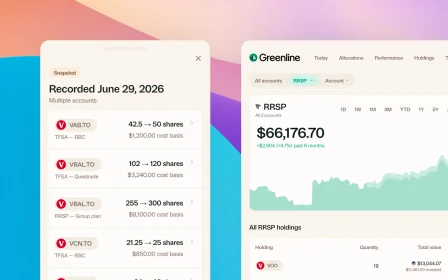
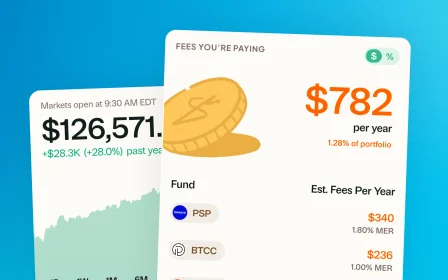
Track what you build without it becoming a second job That's the kind of thing Greenline is there for, whenever you want it.
More in The Big Picture

Just buy XEQT? The one-ETF strategy explained

How to pick ETFs in Canada
Rebalancing: what it means and when to do it
Bonds explained: do you need them in your portfolio?
Just buy XEQT? The one-ETF strategy explained
'Just buy XEQT' has become the go-to answer in Canadian investing. Here's what XEQT actually holds, why it works for most people, and when you want more.
How to pick ETFs in Canada
Rebalancing: what it means and when to do it
Your portfolio drifts over time, and if you never fix it, you might be taking on way more risk than you signed up for.