
Currency-hedged ETFs: do you actually need them?


Part 3 of 9
This article is part of our Going deeper series.
Short answer: A currency-hedged ETF strips out the effect of CAD/USD movement, so your return tracks the underlying stocks more closely. For long-term Canadian investors, hedging usually isn’t worth the extra cost, since currency moves average out over decades.
When I first started buying U.S.-focused ETFs from a Canadian brokerage, I didn’t think about currency at all. I was looking at ticker symbols and returns. Then I noticed that some ETFs came in two versions: one with “hedged” in the name, one without. Same underlying investments, different behaviour. I had no idea which one to pick, so I did what most people do. I picked the one that had performed better recently and called it a day.
That’s not a great approach. The difference between hedged and unhedged has nothing to do with which one “performs better.” It’s about whether you want your returns to include the effect of the Canadian dollar moving against the U.S. dollar (or other currencies). Once you understand what’s actually happening, the decision gets a lot clearer.
This isn’t financial advice. Currency decisions depend on your time horizon, portfolio size, and personal situation.
What currency hedging actually does
When you buy a Canadian-listed ETF that holds U.S. stocks, two things affect your return: how the stocks perform, and how the Canadian dollar moves relative to the U.S. dollar.
Say the S&P 500 goes up 10% in U.S. dollar terms. If the Canadian dollar also weakened by 5% against the U.S. dollar during that period, your return in Canadian dollars would be roughly 15%. The stock gain plus the currency gain. But if the Canadian dollar strengthened by 5%, your return would be closer to 5%. Same stock performance, very different result in your pocket.
A currency-hedged ETF uses financial contracts (forwards and swaps) to neutralize this currency effect. The goal is to deliver returns that match the underlying stocks, without the currency fluctuation on top. An unhedged ETF lets the currency chips fall where they may.
A real example: VFV vs. VSP
VFV and VSP both track the S&P 500 and are listed on the TSX. VFV is unhedged. VSP is the currency-hedged version. Same stocks inside, same provider (Vanguard).
In years when the Canadian dollar weakens (meaning the U.S. dollar gets stronger), VFV tends to outperform VSP because you’re getting a currency tailwind on top of the stock returns. In years when the Canadian dollar strengthens, VSP tends to do better because the hedging protected you from the currency headwind.
Over long periods, the currency movements tend to wash out. The Canadian dollar goes through cycles against the U.S. dollar. Sometimes it’s strong, sometimes it’s weak. Over 10, 15, 20 years, the impact of currency on your total returns gets smaller and smaller, while the stock returns compound regardless.
What hedging costs
Hedging isn’t free. The ETF provider has to maintain currency contracts that need to be rolled over regularly, and those contracts have costs built in. This shows up in two ways:
First, the MER on hedged ETFs is usually slightly higher than the unhedged version. The difference is small (often 0.01-0.05%), but it compounds over time.
Second, and more importantly, the hedging itself has an implicit cost based on the interest rate differential between countries. When Canadian and U.S. interest rates differ, the hedging contracts carry a cost (or occasionally a benefit) that can drag on returns by 0.5-1.5% per year. This cost isn’t visible in the MER. It’s baked into the fund’s tracking and performance. Most investors never notice it because they don’t know to look.
In periods where Canadian interest rates are meaningfully lower than U.S. rates, this hidden cost can be substantial enough to negate the benefit of hedging entirely. You’re paying to remove a risk that might have helped you.
The case for not hedging
For most long-term Canadian investors, unhedged is the simpler and often better choice. Here’s why:
Currency fluctuations smooth out over long periods. If you’re investing for 15-30 years, the short-term swings of the Canadian dollar against other currencies become noise. What matters is the underlying stock returns, and those compound regardless of what the loonie does.
Foreign currency exposure is actually a form of diversification. If Canada’s economy hits a rough patch and the Canadian dollar drops, your unhedged foreign investments become worth more in Canadian dollar terms. That’s a natural hedge against your own country’s economic risks, and it’s one of the arguments against having too much home market bias.
Hedging has both visible and invisible costs. Over decades, those costs add up. For a truly long-term holder, removing currency exposure often means paying to remove something that would have been roughly neutral anyway.
When hedging does make sense
Hedging isn’t always wrong. There are specific situations where it’s reasonable:
If you have a short time horizon, say 1-3 years, and you know you’ll need the money in Canadian dollars, currency swings could meaningfully affect your outcome. Hedging removes that variable.
For bond or fixed-income ETFs, hedging is generally recommended. Bond returns are small and predictable. A 5% currency move on a bond fund returning 4% can completely overwhelm the investment return. The risk-reward math is different than with equities.
If your portfolio is very large and you’re in or near retirement, you might want to hedge a portion of your foreign equity exposure to reduce overall portfolio volatility. This is more about managing risk tolerance than maximizing returns.
What all-in-one ETFs do
If you’re using an all-in-one ETF like XEQT or VEQT, this decision has already been made for you. These funds do not hedge their foreign currency exposure. The portfolio managers at iShares and Vanguard made a deliberate choice: for long-term equity investors, the cost and complexity of hedging isn’t worth it.
That’s not an accident. It lines up with what the research shows and what most large investors do for portfolios with a long time horizon.
The mental trap
The biggest risk with currency hedging is that people chase recent performance. If the Canadian dollar dropped last year, unhedged ETFs looked great. So people pile into unhedged. If the Canadian dollar rallied, hedged looked better, and people switch. This is just market timing with an extra layer of complexity.
Pick your approach based on your time horizon and stick with it. Don’t switch between hedged and unhedged based on what the Canadian dollar did last quarter. That’s the same mistake as trying to time the stock market, just in a different wrapper.
The simple version
If you’re investing for 10+ years in equities, you probably don’t need to hedge. If you’re investing in foreign bonds, you probably should. If you’re using all-in-one ETFs, the decision is already made. If you’re building your own portfolio, go unhedged for equities unless you have a specific, short-term reason not to.
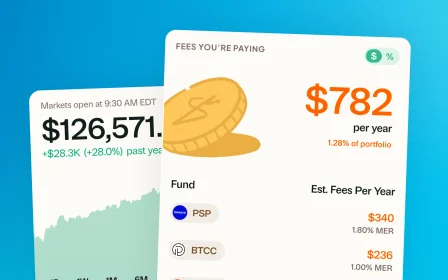
The fees and costs of hedging are real, even when they’re hard to see. Over a long investing career, simplicity usually wins.
The fees, the returns, the details buried in your statements add up, once you can actually see them in one place. If you ever want everything you own in one view, that's what Greenline is for.
More in The Fine Print

Norbert's Gambit: the Canadian currency hack

Home market bias: over-investing in Canada

Just buy XEQT? The one-ETF strategy explained
Norbert's Gambit: the Canadian currency hack
Norbert's Gambit converts CAD to USD near mid-market, not a 1.5% to 2.5% FX markup. How it works and which brokers support it, Wealthsimple included in 2026.
Home market bias: over-investing in Canada