

TFSA vs RRSP: Which should you max out first?


Part 4 of 7
This article is part of our New to investing series.
Short answer: Prioritize your TFSA when your income is under about $80,000 to $90,000. Lean into your RRSP at higher incomes or when your employer matches contributions. If you can max both, do that.
Somewhere in Canada right now, this conversation is happening. At a dinner party, a friend’s place, a coffee shop, maybe a group text. Someone mentions they got a raise. Someone else asks if they’re putting the extra money into their TFSA or RRSP. The group splits into two camps, and everyone has an opinion.
The thing is, most of them are half right. The TFSA-vs-RRSP question isn’t actually a debate with a winner. It’s more like asking whether you should take Highway 401 or the back roads. The answer depends on where you’re starting from, where you’re headed, and what kind of drive you want.
None of this is financial advice. I’m just sharing what I’ve learned from my own experience, and your situation might be completely different. Also worth noting: contribution limits, tax brackets, and rules change every year. We do our best to keep this current, but always double-check the numbers that matter to you. With that said, let’s walk through it.
The one-sentence difference
With an RRSP, you get a tax break now and pay tax later when you withdraw. With a TFSA, you pay tax on the money first, but everything it earns grows and comes out completely tax-free.
That’s it. That’s the core tradeoff. Everything else is just math around your personal situation. (And yes, the fact that both have “savings” in the name is genuinely misleading.)
When the TFSA usually wins
If you’re early in your career and not yet earning a high salary, the TFSA is almost always the better first move. When I first started putting money away, I didn’t even know there were different account types with different rules. I just knew “TFSA” and “RRSP” existed. Here’s what I wish someone had told me.
An RRSP deduction is most valuable when your income is high. If you’re making $50,000, the tax break you get from contributing to an RRSP is decent, but not dramatic. If you stash that same money into a TFSA instead, every dollar of growth comes out tax-free. No tax when you withdraw it for a down payment. No tax when you pull it out for a sabbatical at 40. No tax ever.
The TFSA also has no impact on government benefits. RRSP withdrawals in retirement count as income, which can claw back things like Old Age Security (OAS) and the Guaranteed Income Supplement (GIS). TFSA withdrawals don’t.
And the flexibility matters. You can withdraw from your TFSA anytime without penalty, and the contribution room comes back the following year. Your RRSP? Once you take money out, that room is gone for good (with a couple of narrow exceptions like the Home Buyers’ Plan).
One nuance worth knowing if you hold volatile assets like Bitcoin or Ethereum ETFs in a TFSA: contribution room is consumed when you contribute, not when you withdraw. If a high-volatility holding drops significantly, the room you used is gone, even if you withdraw what’s left. The TFSA shelter is most valuable for assets you genuinely expect to grow over the long term.
When the RRSP usually wins
Now here’s where the RRSP shines: if your income is high today and you expect it to be lower in retirement.
Say you’re making $120,000. You’re in a tax bracket where the government takes a meaningful chunk. An RRSP contribution at this income level gives you a serious tax refund, and if you invest that refund too, the math really starts working in your favour.
The other major RRSP advantage is the Home Buyers’ Plan. You can borrow up to $60,000 from your RRSP (or $120,000 as a couple) tax-free to buy your first home. If buying property is on the horizon, loading up the RRSP can be a smart short-term strategy. (The newer FHSA is worth knowing about too, and you can actually combine both for your first home.)
Some employers also match RRSP contributions. If yours does, that’s free money. Always take the match first, regardless of what else you’re doing.
One more RRSP-only edge that’s easy to miss: U.S. dividends paid into an RRSP are exempt from the 15% U.S. withholding tax under the Canada-U.S. tax treaty, while the same dividends in a TFSA lose 15% you can’t recover. If you hold U.S. dividend payers, the U.S. dividend withholding tax guide walks through how this shifts where you should hold them.
The “both” strategy
For a lot of Canadians, the real answer isn’t TFSA or RRSP. It’s both, in the right proportion.
A common approach: max out your TFSA first (especially if you’re under $80,000–$90,000 in income), grab any RRSP employer match, then contribute to your RRSP with whatever is left. As your salary grows and you move into higher tax brackets, shift more toward the RRSP.
The beautiful thing about the RRSP is that unused contribution room carries forward. You don’t lose it. So if you focus on your TFSA now, you can always use that RRSP room later when the tax deduction is worth more.
A quick way to think about it
Everyone’s situation is different, so take this as a starting point, not a rulebook. But broadly, here’s how a lot of people think about it:
| Your situation | General approach |
|---|---|
| Income under ~$55,000 | TFSA first, almost always |
| Income $55,000–$100,000 | Start splitting between both. TFSA for flexibility, RRSP for the deduction |
| Income over $100,000 | RRSP gets more attractive. Max it out, then use the refund to top up the TFSA |
| Employer RRSP match | Always take it, no matter your income. Free money is free money |
Don’t let the decision stall you
For years, every paycheque I earned went straight into a chequing account. I didn’t know there was anywhere else to put it. Nobody in my family talked about investing, and school certainly didn’t cover it. I started at 22, which is early by almost any measure. I know that. But I still catch myself thinking about the few years before that, when I was telling family to buy Apple and Lululemon but wasn’t old enough to open an account, and later, wasn’t confident enough to put my own money behind what I was saying. Four years isn’t the end of the world. I just know those years would have compounded nicely, and I think every investor, no matter when they started, has their own version of that feeling.
Now I see teenagers investing under their parents’ accounts at 14, 16. The head start they’ll have is real. If you’re in a position to invest, even a small amount, the thing I’d encourage is not to let the TFSA-vs-RRSP decision slow you down. Both are powerful tools. Picking one and investing consistently will put you ahead of most Canadians who are still debating.
Picking either a TFSA or an RRSP and investing consistently will put you ahead of most Canadians who are still debating which one is better.
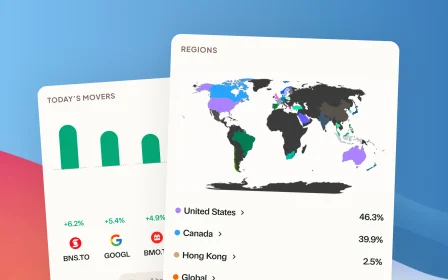
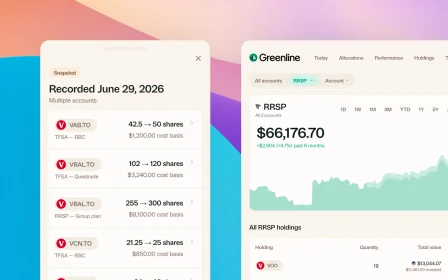
See how your TFSA and RRSP are performing, side by side If you ever want everything you own in one view, that's what Greenline is for.
More in The Account Maze

What is a TFSA? (and why it's not a savings account)
TFSA contribution room: how it works

The FHSA explained: Canada's newest account

How much can you withdraw to buy a house?
TFSA vs FHSA: where to put your money if you're saving for a home

The order of financial priorities for Canadians
What is a TFSA? (and why it's not a savings account)
A TFSA is not a savings account, even though the name suggests one. It's a container for investments, and the difference is what makes it powerful. Here's the plain-English version.
TFSA contribution room: how it works
The FHSA explained: Canada's newest account
How much can you withdraw to buy a house?
TFSA vs FHSA: where to put your money if you're saving for a home