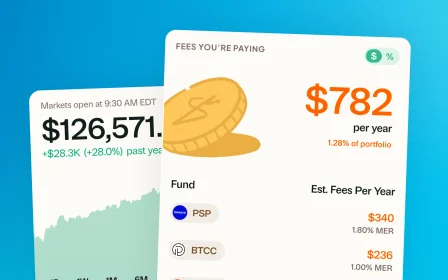
Why most portfolio trackers want your bank login


Short answer: Most portfolio trackers ask for your bank login because aggregator services (Plaid, Flinks, MX) are the cheapest way to pull data automatically. The trade-off is that a third party holds an access token to your accounts, the connections break often, and Canadian coverage is patchy. Statement-based trackers like Greenline avoid this entirely.
The first thing most portfolio trackers ask you for isn’t your name or your email. It’s your bank login. Before you’ve even seen a dashboard or a chart, you’re handing over the keys to your financial accounts. From a product design perspective, this makes sense.
Most portfolio trackers ask for your bank login before you’ve even seen a dashboard. You’re handing over the keys to your financial accounts before you know what you’re getting.
But there’s more going on behind that login screen than most people realize. I want to walk through how bank linking actually works, why companies use it, and what the trade-offs are. Full disclosure: I built Greenline specifically to avoid requiring bank credentials, so I’m not a neutral party here. But the facts are the facts, and you should know them regardless of which tool you use.
How bank linking actually works
There are two main ways a portfolio tracker can pull your financial data. The first, and older, method is called screen scraping. This is exactly what it sounds like. You give the app your bank username and password. The app logs in as you, loads the same pages you’d see in your browser, and reads the numbers off the screen. It’s like someone sitting at your computer, logging into your bank, and writing down your balances. The problem is that this method requires your actual credentials and breaks whenever your bank changes the layout of their website. It’s fragile by design.
The second method uses APIs provided by financial data aggregators like Plaid, Flinks, or MX. Instead of scraping web pages, these services establish structured connections with financial institutions. You authenticate through a secure widget, and the aggregator receives an access token that lets it retrieve your data on an ongoing basis. This is more reliable than screen scraping and doesn’t require the app to store your password directly. But it still means a third party holds a token that grants access to your account information.
In Canada, the picture is more complicated. Open banking regulation has been slow to roll out compared to the UK or parts of Europe. Fewer Canadian brokerages support structured API connections, which means more screen scraping still happens behind the scenes. Even when an app uses an aggregator like Plaid, the aggregator itself may be screen scraping your Canadian brokerage on the back end. You might think you’re using the modern, secure method when the underlying connection is still the old one.
Why companies prefer this model
From a business perspective, bank linking solves several problems at once. It removes friction during onboarding. Instead of asking you to download a statement, figure out the right file format, and upload it, the app just asks for a login and populates everything in seconds. That speed matters. Every extra step in a signup flow is a point where people drop off. Automatic data refresh also means higher retention. If your data updates on its own, you’re more likely to keep opening the app.
There’s also a data dimension worth understanding. Some aggregators anonymize and sell financial data for market research. Not all of them do this, and many have clear privacy policies that limit it. But the business model of financial data aggregation sometimes involves the data itself being the product, not just the connection. This isn’t necessarily sinister, but it’s worth reading the privacy policy of whatever aggregator your tracker uses. If you’re curious about who handles the connection, most apps will tell you somewhere in their security documentation.
The trade-offs
The biggest concern with credential sharing is what it means for your fraud protection. Most Canadian banks have policies stating that if you share your login credentials with a third party, they may not cover unauthorized transactions. This is what first caught my attention years ago when I was using Mint. I realized that by linking my accounts, I might have been voiding the fraud guarantees my bank provided. That realization was one of the reasons I built Greenline the way I did. You can read more about our thinking on our philosophy page.
Third-party access tokens can also break. Banks rotate security protocols, aggregators lose connections, and tokens expire. If you’ve ever opened a bank-linked app to find half your accounts showing errors and asking you to re-authenticate, you know the experience. It’s not a rare occurrence. For Canadian brokerages in particular, connection reliability is inconsistent. Some work fine for months, then stop for weeks.
On the other hand, fairness matters here. Millions of people use bank-linked financial apps every day without incident. The convenience is real. For someone who would never track their portfolio manually, a linked app is better than no tracking at all. The security risks are not zero, but they’re also not catastrophic for most users. The right choice depends on your comfort level, your bank’s specific policies, and how much control you want over your data.
The alternative: manual upload
There’s another way to get your financial data into a portfolio tracker: you provide it yourself. You log into your brokerage, download a PDF statement or CSV export, and upload it. No credentials shared, no third-party access tokens, no aggregator sitting between you and your bank. Your brokerage never knows you’re using a separate tool.
The trade-off is obvious. It’s a manual step. You have to remember to do it, and your data is only as current as your last upload. For most people, this means updating once or twice a month, or whenever they make a trade. The whole process takes about two minutes. Whether that’s a dealbreaker depends entirely on how you use a portfolio tracker. If you need real-time data for active trading, manual upload isn’t for you. If you’re checking in periodically to see how your long-term investments are doing, the difference between data from today and data from last week is negligible.
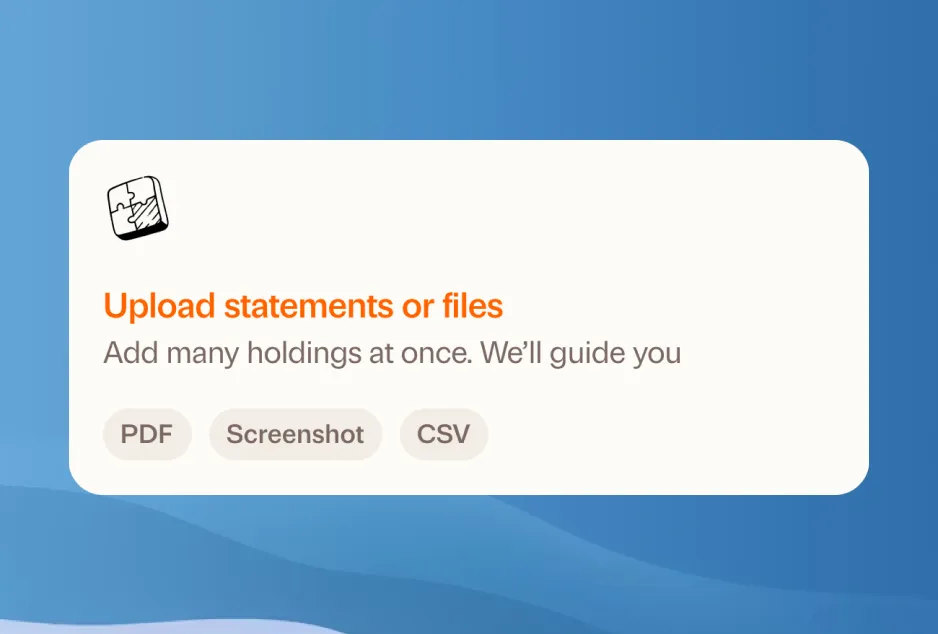
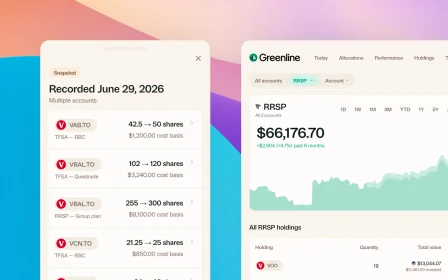
In Greenline, you upload a statement and the app extracts your holdings, transactions, and account details from it. No credentials leave your hands. Your brokerage has no idea you’re using Greenline, and no third party has access to your accounts. It’s a simpler model with a clear trade-off: a few minutes of your time in exchange for complete control over your data.
Is it safe to link your bank account to an investment app?
It depends. The answer varies based on which app you’re using, which aggregator handles the connection, and what your bank’s policies say about credential sharing. Apps that use established aggregators like Plaid generally follow strong security practices, including encryption and limited data access. But some Canadian banks explicitly warn that sharing your login with any third party could affect your fraud protection. Before linking, check your bank’s terms of service. Look for language about third-party access or credential sharing. If you’re comfortable with the terms, bank linking can work fine. If you’re not, or if you’d rather not take the risk, there are alternatives. You can learn more about how Greenline handles security on our security page.
Can a portfolio tracker work without bank linking?
Yes. Manual-upload trackers work from files you provide, like PDF statements or CSV exports from your brokerage. You download a file, upload it, and the app reads your data from that file. No login credentials, no access tokens, no ongoing connection to your bank. The trade-off is that your data doesn’t refresh automatically. You update it when you choose to, on your own schedule. For long-term investors who check in weekly or monthly, this is more than enough. For the full argument on why live syncing is less important than it seems, read you don’t need a live bank sync.
Track your portfolio without sharing your bank login That's the kind of thing Greenline is there for, whenever you want it.
More in The Long Game

Best way to track your portfolio in Canada

What to look for in a portfolio tracker

Do you even need a portfolio tracker?
Best way to track your portfolio in Canada
We built a portfolio tracker, so we're biased. But here's an honest look at every approach: spreadsheets, brokerage tools, bank-linked apps, and more.
What to look for in a portfolio tracker