

CAGE vs AVGE: Avantis all-equity, Canadian-built versus U.S.-listed


Short answer: AVGE and CAGE run the same Avantis all-equity strategy. AVGE is the U.S.-listed original, trading in USD on NYSE Arca with a 0.23% expense ratio. CAGE is the Canadian-listed equivalent that started trading on the TSX in March 2026, with a 0.28% management fee (0.35% annualized MER in its first interim report, to June 30, 2026). The two also differ on home bias: CAGE holds about 30% Canada, AVGE has no dedicated Canadian fund. For most Canadians, the higher headline cost on CAGE is the price of avoiding U.S.-dollar conversion, T1135 reporting, U.S. estate tax exposure, and the friction of a USD account. If those don’t apply to you, AVGE is the cheaper way to express the same view.
For Canadians who liked the Avantis approach, the only practical option for years was AVGE in a USD account. That changed on March 18, 2026, when CIBC and Avantis listed CAGE.TO on the TSX. Same Avantis approach, but built from different funds, as the sections below show.
This guide is for people choosing between the two, or thinking about whether to switch from AVGE to CAGE. If you want the standalone picture of the Canadian fund first, the CAGE ETF guide covers what CAGE.TO holds, its fee, and how the Avantis strategy works.
This is not financial advice. I’m sharing what I’ve learned from my own research, and your situation might be different from mine. Fund details change over time, so always check the latest disclosures before making a decision.
What’s actually the same
Both funds are run on the same Avantis methodology. Avantis Investors, a unit of American Century, designs and operates the strategy in both wrappers. Eduardo Repetto and the same investment team are behind both products.
That means the underlying logic is identical:
- Value tilt. Cheaper companies on fundamentals (book value, earnings, cash flow) get more weight than they would in a cap-weighted index.
- Size tilt. Smaller companies get more weight than market cap alone would give them. Not “small-cap only,” just less concentration in megacaps.
- Profitability tilt. Reliably profitable companies get included or overweighted. Chronically unprofitable ones get filtered or down-weighted.
Both funds are 100% equity, globally diversified, and structured as fund-of-funds. The underlying funds aren’t the same ones, though. AVGE holds U.S.-listed Avantis ETFs (AVUS, AVLV, AVDE, AVEM, and others). CAGE holds the Canadian-listed Avantis CIBC ETFs (CAUS, CACE, CADE, CASV, CAEM), which own their stocks directly.
If you believe in the factor thesis, you’d hold either fund for the same reasons.
The difference people miss: Canada
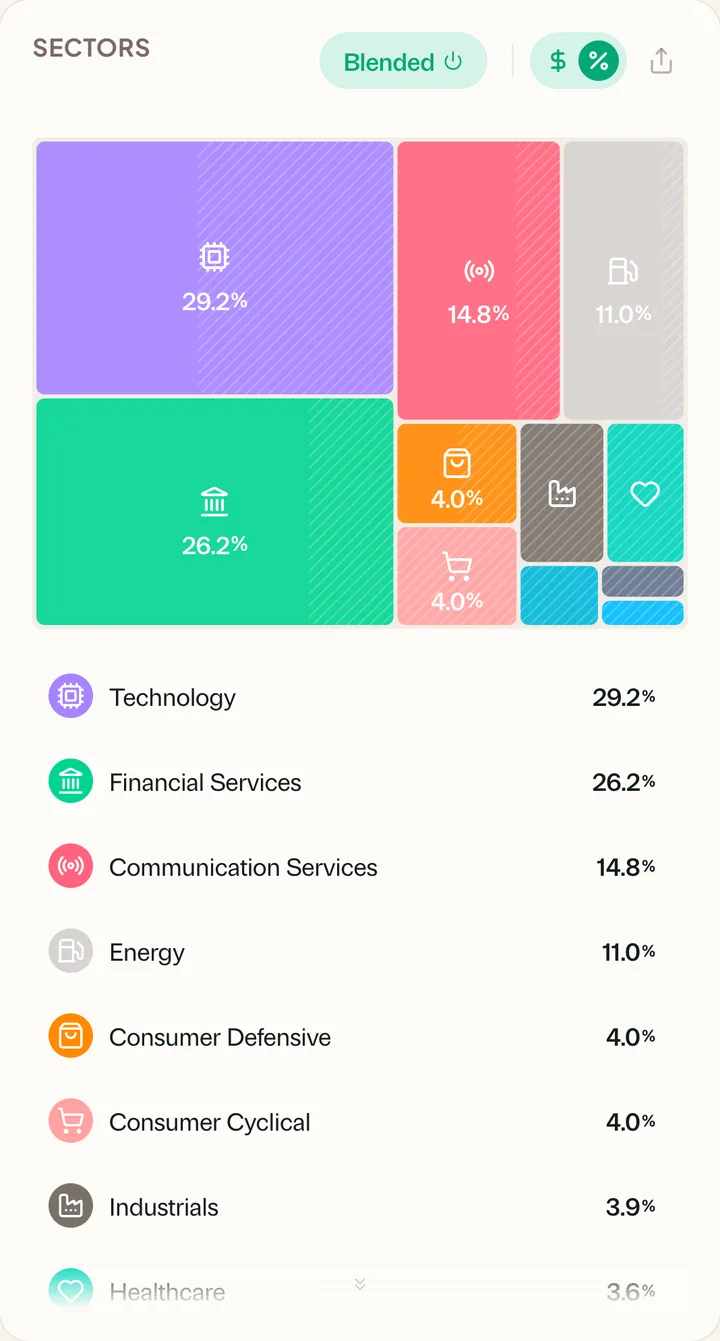
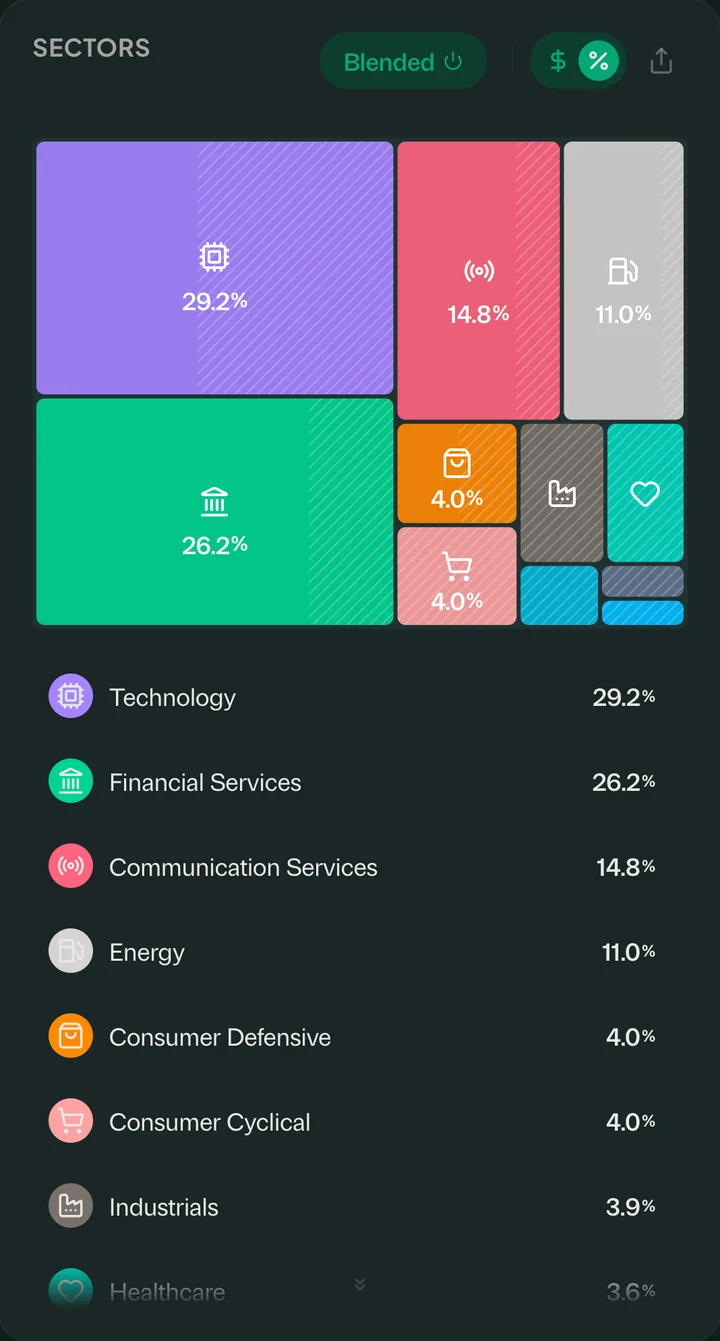
The biggest difference in what you actually own isn’t the wrapper, it’s the home bias. At June 30, 2026, CAGE held 29.5% in its Canadian equity fund and 41.4% in its U.S. fund. AVGE has no dedicated Canadian fund at all: as of October 8, 2026, about 62% of it sat in three U.S. funds (AVUS 43.7%, AVLV 15.4%, AVUV 3.4%), with the rest in international and emerging markets funds.
So CAGE is closer to a factor-tilted XEQT or VEQT, with a deliberate Canada overweight, while AVGE is a U.S.-centred global portfolio. If you want the AVGE-style mix in a Canadian wrapper, CIBC’s CAGX, which listed in August 2026 and targets about 3% Canada, is the closer match.
What’s actually different
Three things: the wrapper, the cost, and (as above) the Canada weight.
| Attribute | CAGE.TO | AVGE |
|---|---|---|
| Listed on | Toronto Stock Exchange | NYSE Arca |
| Currency | CAD, unhedged | USD |
| Inception | March 18, 2026 | September 27, 2022 |
| Headline cost | 0.28% mgmt fee; 0.35% annualized MER in first interim report (to June 30, 2026) | 0.23% expense ratio |
| Canada weight | 29.5% (June 30, 2026) | No dedicated Canadian fund |
| Manager | CIBC, sub-advised by Avantis Investors | American Century, with Avantis Investors as sub-advisor |
| Strategy | Rules-based active, factor-tilted | Rules-based active, factor-tilted |
| Holdings approach | Fund-of-funds (Canadian-listed Avantis CIBC ETFs) | Fund-of-funds (U.S.-listed Avantis ETFs) |
| Distribution frequency | Quarterly | Quarterly |
| AUM | About $695M (June 30, 2026) | Multi-billion |
| Track record | Months of data | Listed since 2022 |
The headline cost gap is about 5 basis points, or about 12 using CAGE’s 0.35% interim MER. CAGE is more expensive because the Canadian wrapper has to do its own administration, listing, and disclosure, and because there’s a layer of fees to pay the underlying Avantis funds. Same kind of structure XEQT and VEQT use, just with the factor strategy on top.
What the Canadian wrapper actually buys you
If you compare only the fee, AVGE wins by 5 basis points (about 12 against CAGE’s interim MER). But the wrapper friction matters more than the fee for most Canadian investors.
1. No currency conversion. Holding AVGE means buying with USD. That’s either a USD account, repeated FX conversions at the bank’s spread, or Norbert’s Gambit every time you contribute. Most brokerages charge somewhere between 1% and 2% on FX, depending on the broker and the size of the trade. Even a 1% spread on a $10,000 contribution is $100, every time. CAGE removes that friction entirely.
2. No T1135 reporting headache. T1135 is the CRA form Canadians have to file when foreign property held outside registered accounts crosses $100,000 in cost basis at any point in the year. AVGE in a non-registered account is foreign property. CAGE is not. If you’re putting Avantis exposure into a non-registered account and your numbers are getting close to that threshold, the CAD-listed wrapper saves you the form (and the audit risk if you forget).
3. No U.S. estate tax exposure. Canadians holding U.S.-situs assets above certain thresholds in non-registered accounts can end up exposed to U.S. estate tax on death. Treaty rules and unified credit reduce the risk for most people, but it’s a real consideration above roughly $1.4 million USD in U.S.-situs assets. CAGE is a Canadian-listed ETF and isn’t U.S.-situs. AVGE is.
4. Cleaner tax slips. AVGE distributions show up on a 1099 (or as foreign income on a T5/T3 depending on how your broker reports). CAGE distributions flow through Canadian fund-of-funds tax treatment, which can be messier in non-registered accounts but is at least familiar to Canadian tax software and Canadian accountants.
5. Simpler one-account setup. Canadians who hold AVGE typically run a USD account alongside their CAD account. CAGE collapses that back to one account, one currency, one mental model.
The fee difference matters less than any one of those for most people. For very large taxable accounts, the math can flip the other way, especially if you already have USD income or USD spending and the FX cost is effectively zero for you.
Where AVGE still makes sense
Three situations:
You have USD income or spending. If you’re paid in USD, retire to the U.S., or hold a chunk of USD reserves anyway, the FX argument disappears. Holding AVGE in USD means no conversion costs and a natural currency match.
You’re in an RRSP and want maximum withholding tax efficiency on U.S. equities. This is a subtle one. U.S. dividends in an RRSP are exempt from U.S. withholding tax under the Canada-U.S. tax treaty, but only when the security is held directly. CAGE’s U.S. stocks sit inside CAUS, a Canadian-listed ETF, and the treaty exemption doesn’t reach through a Canadian fund. The 15% U.S. withholding on those dividends is lost, even in an RRSP. It’s a small drag on the U.S. portion each year, but it’s permanent. AVGE held directly in an RRSP avoids it on the U.S. funds it holds.
You already hold AVGE in a non-registered account with significant unrealized gains. Selling to buy CAGE realizes the gain and triggers tax. The cleaner move is to leave AVGE alone and add new contributions to CAGE instead.
Where CAGE wins
For most Canadians, in most accounts. Specifically:
- TFSA, FHSA, RESP, RDSP, and non-registered accounts: CAGE is meaningfully simpler. The treaty exemption that helps AVGE in RRSPs doesn’t apply in any of these account types. So the U.S. listing buys you nothing on tax, but you still pay the FX, T1135, and U.S. estate tax costs.
- Smaller portfolios where Norbert’s Gambit overhead per contribution is annoying.
- Anyone who values one-account simplicity.
Practical questions worth thinking through
Is the strategy as good in the Canadian wrapper? Same Avantis team and same rules, applied through Canadian-listed underlying funds. The factor approach is the same; the country mix is not, since CAGE carries about 30% Canada.
Will tracking diverge? Yes, more than you might expect. With about 30% in Canada against AVGE’s U.S.-centred mix, CAGE will lead in years when Canadian stocks beat U.S. stocks and trail when they don’t. On top of that, AVGE quoted in USD moves with the exchange rate when you measure it in CAD.
Should I switch? That’s a tax question, not a strategy question. If you’re in a registered account, the switch is friction-free. In a non-registered account with unrealized gains, math the tax bill before deciding.
Frequently asked questions
Is CAGE the same as AVGE?
Same strategy, different wrapper. Same strategy, different wrapper, and a different country mix. Both run the Avantis all-equity factor approach (value, size, profitability tilts). AVGE is U.S.-listed, USD-denominated, holds U.S.-listed Avantis ETFs, and has a 0.23% expense ratio. CAGE is Canadian-listed, CAD-denominated, holds the Canadian-listed Avantis CIBC ETFs, and has a 0.28% management fee (0.35% annualized MER in its first interim report, to June 30, 2026). CAGE also holds about 30% Canada; AVGE has no dedicated Canadian fund. For a Canadian investor, the wrapper differences (FX, T1135, U.S. estate tax, account simplicity) usually matter more than the fee gap.
Can I hold AVGE in a TFSA?
Yes, your broker may allow it, but it’s usually not a good idea. U.S.-listed ETFs held in a TFSA still incur U.S. dividend withholding tax (the treaty exemption only applies to RRSPs, RRIFs, and similar retirement accounts). You’d be paying tax that doesn’t exist in CAGE. For a TFSA, the Canadian-listed wrapper is the cleaner choice.
Can I hold AVGE in an RRSP without the withholding tax?
Yes. The Canada-U.S. tax treaty exempts U.S. dividends from withholding when a U.S.-listed security is held directly in an RRSP, RRIF, LIRA, or LIF. CAGE holds its U.S. stocks through CAUS, a Canadian-listed ETF, so the treaty exemption doesn’t reach them and the 15% withholding on U.S. dividends is lost. For an RRSP that’s heavily U.S.-tilted and large enough that this leakage matters, holding AVGE directly is more tax-efficient. For most other accounts, CAGE is simpler and the math is roughly a wash.
Should I switch from AVGE to CAGE?
In a registered account, swapping is straightforward: the trade doesn’t trigger tax, and you’d be reducing FX and T1135 friction. In a non-registered account with unrealized gains, the answer depends on the tax bill from selling. The cleaner move is often to leave existing AVGE alone and direct future contributions to CAGE instead, letting the AVGE position run off naturally over time.
Will CAGE and AVGE perform identically?
No. They share the Avantis methodology, but CAGE holds about 30% Canada and AVGE is centred on U.S. stocks, so their returns will differ whenever Canadian and U.S. markets diverge. Currency (AVGE measured in USD, CAGE in CAD) and the fee gap add smaller differences on top.
What’s the difference in fees?
AVGE charges 0.23% as its expense ratio. CAGE has a 0.28% management fee, and its first interim report (period ended June 30, 2026) puts the full annualized MER at 0.35%. Net cost gap is roughly 5 to 12 basis points.
Bottom line
If you live and invest in Canadian dollars and you’re using a registered or smaller non-registered account, CAGE is the cleaner home for the Avantis strategy. The small fee gap is the cost of avoiding FX, T1135, U.S. estate tax exposure, and the friction of a USD account. For most Canadians, that’s a trade worth making.
If you have USD income or spending, hold a large RRSP heavily tilted to U.S. equities, or already hold AVGE in a non-registered account with significant unrealized gains, the math can favour staying with AVGE.
What you shouldn’t do is hold both for the sake of diversification. They’re the same strategy, and the main thing holding both changes is your Canada weight. Pick the wrapper that fits your situation and put all your Avantis exposure there.
See how CAGE fits with everything else you own, across every account. Try a sample portfolio


More in DIY Investing

CAGE ETF: what CAGE.TO is, what it holds, and how it works
CAGE vs XEQT: what to know about Canada's new Avantis all-equity ETF
CAGE vs VEQT: comparing CIBC's new Avantis ETF to Vanguard's all-in-one
CAGE vs CASV: complete portfolio versus pure small-cap value tilt

Avantis CIBC ETFs: factor investing arrives in Canada

Not all ETFs are created equal
CAGE ETF: what CAGE.TO is, what it holds, and how it works
CAGE.TO is CIBC and Avantis's all-equity ETF, listed on the TSX in March 2026. What it holds, the 0.28% management fee, the factor tilt, and who it's for.
CAGE vs XEQT: what to know about Canada's new Avantis all-equity ETF
CAGE vs VEQT: comparing CIBC's new Avantis ETF to Vanguard's all-in-one
CAGE vs CASV: complete portfolio versus pure small-cap value tilt
Avantis CIBC ETFs: factor investing arrives in Canada